How to create a 30-day blog plan for a new website

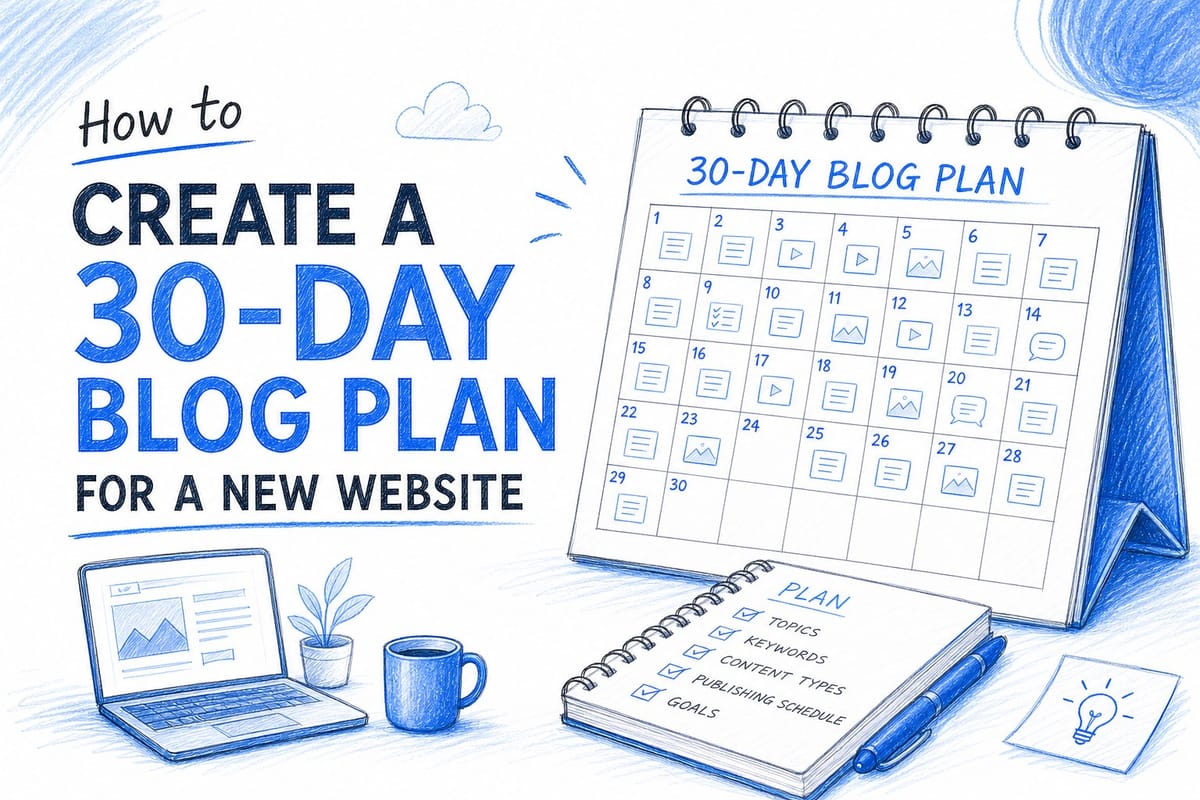
Table of contents
1. Start with your site's content foundation, not random topics
2. Build your week-by-week publishing calendar
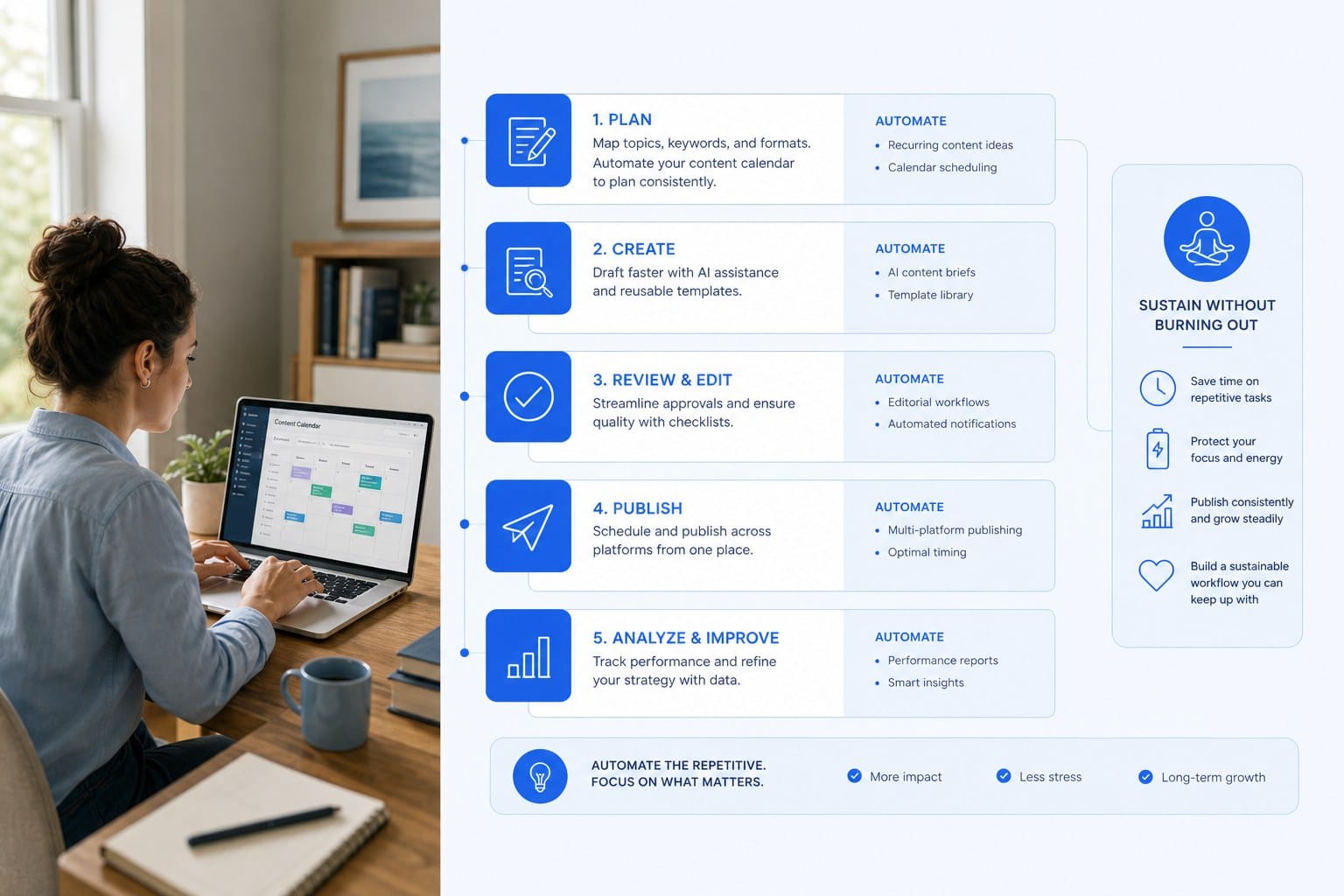
3. Automate and sustain your publishing workflow without burning out
Starting a new website is exciting, but the blank content calendar staring back at you can feel overwhelming fast. You know you need blog posts, but how many? About what topics? In what order? Without a clear plan, most new sites either publish a burst of posts in week one and then go quiet, or they spend so long overthinking the strategy that they never publish anything at all. A solid 30 day blog plan for a new website solves both problems. It gives you a realistic publishing schedule, a focused set of topics, and a logical content structure that helps search engines understand what your site is actually about. In this guide, I walk you through exactly how to build that plan from scratch, even if you are starting with zero content, zero traffic, and zero team.
Start with your site's content foundation, not random topics
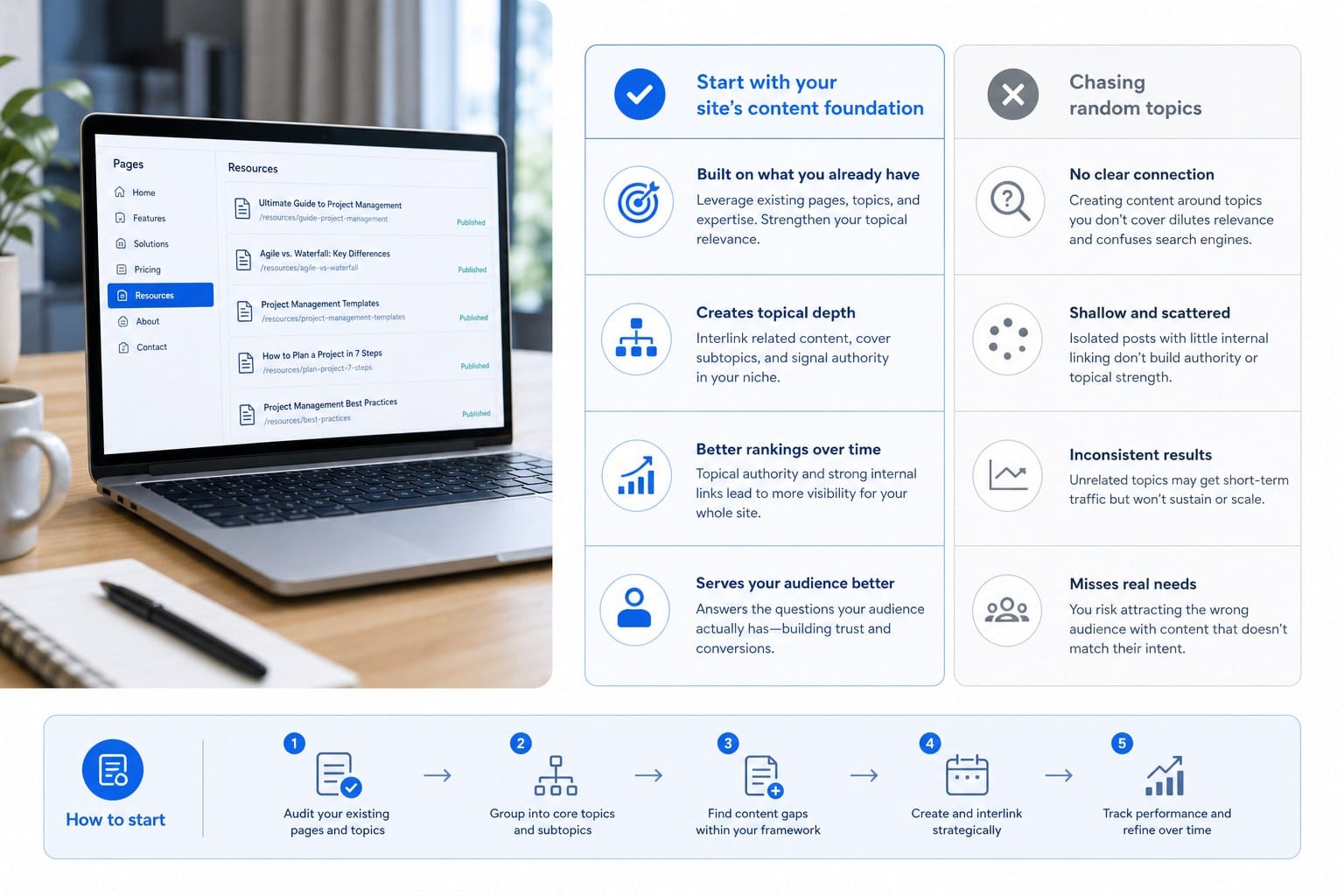
Before you write a single post, you need to understand what your site is about at a structural level. This is called your content foundation, and it shapes every topic decision you make during the first 30 days.
The first step is to identify your main content pillars. A content pillar is a broad theme that your site covers. If you run a site about personal finance for freelancers, your pillars might be budgeting, taxes, invoicing, and retirement. Every blog post you write in month one should live under one of these pillars. This keeps your site focused and helps search engines build a clear picture of your authority.
Aim for three to five pillars. More than five makes it hard to build depth in any area during the first 30 days. Fewer than three can make your site feel too narrow, especially if one pillar is harder to rank for than others.
Once you have your pillars, brainstorm eight to twelve topics per pillar. At this stage, you are not committing to writing all of them. You are just making sure each pillar has enough material to work with. Some of those topics will become your 30-day posts. Others will feed months two and three.
After you have your pillar topics mapped out, do basic keyword research on each one. You do not need expensive tools to do this well. Free tools like Google Search Console (once you have it connected), Google's autocomplete suggestions, and the "People Also Ask" boxes in search results give you a lot of signal about what real people are searching for.
Look for two things. First, search intent. A post titled "What is content marketing" serves someone who wants a definition. A post titled "Content marketing strategy for small business" serves someone ready to take action. Posts that match clear action-oriented intent tend to convert visitors better than purely informational posts. Second, competition. Brand new websites have low domain authority, so you are unlikely to rank for ultra-competitive terms in the first 30 days. Focus on longer, more specific phrases that target a narrow slice of a topic. These are often called long-tail keywords, and they are your best friends early on.
For example, instead of targeting "SEO tips," a new site might target "SEO tips for Etsy sellers in 2025." The search volume is lower, but so is the competition, and the people searching that phrase know exactly what they want.
Once you have your pillars and your keyword-informed topic list, group your topics by type. I use three categories: foundational posts, supporting posts, and cluster posts.
Foundational posts are the big, authoritative pieces that explain a core concept your audience needs to understand. These usually run long and cover a topic comprehensively. You want two to four of these in your first 30 days.
Supporting posts go deeper on specific angles within a foundational topic. If your foundational post is "How to set freelance rates," a supporting post might be "How to raise your rates with existing clients without losing them."
Cluster posts are shorter, highly specific, and often target very narrow keywords. They link back to your foundational posts, which signals to search engines that your foundational content is the authority page on that topic.
This three-tier structure is the backbone of a healthy 30 day blog plan for a new website. It tells search engines you have both depth and breadth on your subject, and it gives readers a natural path through your content.
One thing I want to flag here: resist the urge to publish everything about your best topic in week one. It feels productive, but it actually hurts you. Search engines reward consistent publishing over time. A site that publishes two posts a week for four weeks looks far more credible than a site that publishes eight posts in day one and then disappears. I cover the reasoning behind this in more detail in this post on how often to publish blog posts for SEO growth, which is worth reading before you finalize your publishing schedule.
By the end of this first planning phase, you should have a list of roughly 12 to 16 blog topics organized by pillar and type. That is your content inventory for the month. Now you need to turn that inventory into a calendar.
Build your week-by-week publishing calendar
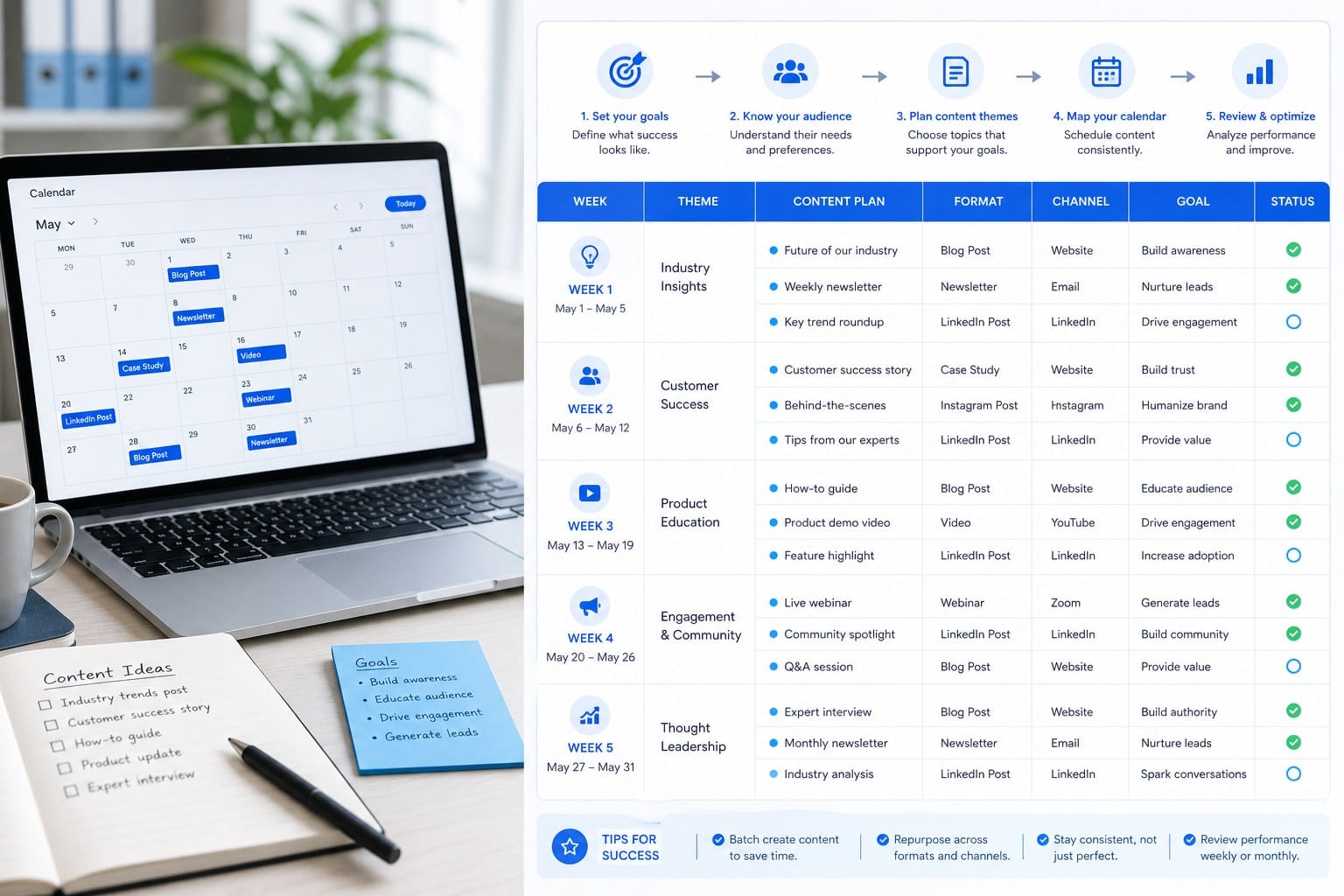
A content inventory is not a plan. A plan has dates, sequences, and clear logic for why each piece comes before or after another. This section walks through how to structure your four weeks so your content builds on itself rather than sitting in isolation.
Before I lay out the weekly structure, decide on your publishing cadence. For a brand new website, I recommend two to three posts per week. One post a week is too slow to build momentum in your first 30 days. More than three posts a week usually leads to quality problems, especially if you are writing everything yourself.
If you are using a tool or service that handles research and writing for you, you may be able to maintain a higher cadence without quality dropping. I will come back to that in the next section. For now, assume two to three posts per week as your baseline.
Here is how I structure the four weeks.
Week one: establish your authority baseline. Your first week of posts should do one job: tell search engines and readers what this site is fundamentally about. Publish your strongest foundational post in this week. This is your most important piece of content. It should be long, well-researched, and genuinely useful. It is the post you will link back to from almost everything else you publish.
Alongside your foundational post, publish one or two supporting posts that tie directly to it. If your foundational post is about email marketing for independent consultants, your supporting posts in week one might cover email subject line writing and how to choose an email platform. These posts are shorter and more focused, but they link back to the foundational piece, creating your first internal link cluster.
Do not try to cover multiple pillars in week one. Stay focused on one pillar so search engines get a clear signal about your site's first area of depth.
Week two: expand to your second pillar. Now that you have a small cluster of content in pillar one, move to pillar two. Publish your foundational post for that pillar and one or two supporting posts. The logic is the same: anchor the foundational piece, then build around it.
At the end of week two, go back and add one or two internal links from your week two posts to your week one posts where they are genuinely relevant. Internal linking is one of the most underrated SEO tactics on a new site. It distributes authority across your pages and helps search engines crawl your content more efficiently.
Week three: go deeper with cluster posts. By week three, you have two content clusters started. Now you fill them out. Publish two to three cluster posts per pillar. These are the highly specific, long-tail keyword posts I mentioned earlier.
For example, if pillar one is about email marketing, cluster posts in week three might target phrases like "how to write a welcome email sequence for a coaching business" or "best email marketing tools for under 1000 subscribers." These are narrow, low-competition topics that real people search for.
Cluster posts are also great places to add value through examples, step-by-step instructions, and comparisons. Readers who land on a cluster post are often close to making a decision or solving a specific problem. Meeting them there with genuinely useful content builds trust fast.
Also in week three, do a quick internal audit. Make sure every post published so far links to at least one other post on your site. No page should be an island.
Week four: address audience questions and reinforce your pillars. Your final week of the 30-day plan is about filling gaps. Look at the questions your audience actually asks. Check comments, forums, Reddit threads, and social media groups in your niche. What keeps coming up? What do people get wrong or struggle to find good answers for?
Publish two to three posts this week that answer specific audience questions. These are sometimes called "FAQ posts" or "question-based posts," and they tend to show up in Google's featured snippets when they are written clearly and formatted well.
By the end of week four, you should have 10 to 14 published posts organized across two pillars, with a third pillar partially started. That is a real content foundation. It is not just a collection of random articles. It is a structured library that search engines can index and understand.
A few notes on format and length. Not every post needs to be 3,000 words. Cluster posts and FAQ posts can run 800 to 1,200 words and still perform well for the right keywords. Foundational posts should be longer, often 2,000 to 4,000 words, because they need to cover a topic with enough depth to earn authority.
Always include headers, short paragraphs, and at least one clear takeaway per section. Readers scan before they read. If your headers and opening sentences do not hook them, they leave. The same applies to search engines, which use your heading structure to understand what a page covers.
One more practical point: assign a primary keyword to every post before you start writing. Write it down. When you draft the post, include that keyword in your title, your first paragraph, at least one subheading, and your meta description. That is the minimum. Do not force it into every sentence. Use it where it fits naturally and move on.
The schedule above is a framework, not a rigid mandate. If you have a topic that deserves more depth than you expected, give it more time and push another post back. The goal of a 30 day blog plan for a new website is to build a consistent, organized foundation. A few days of flexibility will not break that goal.
Automate and sustain your publishing workflow without burning out
Planning a 30-day content calendar is one thing. Actually executing it while running a business, managing clients, or building a product is something else entirely. This is the part most guides skip over, and it is exactly where most new sites stall out.
Let me be direct: the biggest threat to your 30-day plan is not a lack of ideas. It is time and energy. Research takes time. Writing takes time. Formatting, adding images, writing meta descriptions, hitting publish, promoting on social channels - it all adds up. If you are doing this alone, the workload can feel impossible to sustain past week two.
So the first thing I want to address is how to make your workflow leaner without sacrificing quality.
Batch your research. Instead of researching one post at a time, set aside a few hours each week to research three to four posts at once. Use a simple document to collect notes, statistics, quotes, and example links for each post. When it is time to write, your raw material is already there. This cuts your writing time significantly because you are not switching between research mode and writing mode mid-draft.
Use templates for recurring post formats. If you are writing FAQ posts or comparison posts regularly, create a template for each type. The template does not write the post for you, but it removes the decision fatigue of figuring out structure every time you sit down to write.
Schedule posts in advance. Most CMS platforms let you draft and schedule posts ahead of time. Write on Monday, schedule for Wednesday and Friday. This decouples your writing sessions from your publishing dates, which reduces stress considerably.
For Ghost CMS users specifically, there are additional workflow options worth knowing about. If you are running your blog on Ghost, you can connect it to publishing tools that handle everything from drafting to formatting to scheduling. I go into the specifics of that in this post about AI tools that publish directly to Ghost CMS, which covers how the integration actually works in practice.
Now let me talk about AI and automation, because this is where things get genuinely interesting for new site owners.
If you are a founder, small business owner, or independent creator trying to maintain a 30-day publishing plan without a writing team, AI-assisted content tools have changed what is actually possible. The best of these tools do not just generate generic text. They research topics, structure posts around your chosen keywords, match your brand's voice, and in some cases publish directly to your CMS without you touching a single formatting setting.
That last point matters more than it sounds. The bottleneck for most bloggers is not ideation. It is production. If you can cut the time between "I have a topic" and "this is live on my site" from four hours to 20 minutes, you can sustain a publishing schedule that would otherwise be impossible.
Blogtude is built around exactly this problem. It generates a full 30-day content strategy, produces long-form articles with on-brand visuals, and publishes directly to Ghost and other CMS platforms. If you are building a new site and you want consistent, SEO-driven content without hiring writers or spending your weekends writing blog posts, that kind of automated workflow makes the difference between a content plan you stick to and one that sits in a document and collects dust.
If you want to understand what to look for in a tool like this before committing to one, this guide on AI blog tools for small business owners: what to look for before you buy breaks down the key questions to ask.
Beyond tooling, here are a few workflow habits that make a real difference over a 30-day period.
Keep a running idea list. Every time you read something interesting, hear a question from a customer, or spot a gap in existing content in your niche, add it to a list. Do not stop to evaluate it right away. Just capture it. At the end of each week, review the list and pull out anything that fits your content pillars. This keeps your topic well full without requiring a dedicated brainstorming session.
Set a minimum viable post standard. Decide in advance what the floor is for a publishable post. For me, that is a clear keyword, a useful structure, at least one concrete example, and an introduction that earns the reader's attention. If a draft meets those four criteria, it is good enough to publish. Perfect is the enemy of consistent, and consistent publishing beats sporadic perfection every time for new sites trying to build organic traffic.
Track your posts in a simple spreadsheet. For each post, note the title, target keyword, publish date, word count, and pillar. After 30 days, this spreadsheet becomes your first content audit. You can see which pillars you over-indexed on, which post types you avoided, and where you have obvious gaps to fill in month two.
Repurpose strategically. After a post is live, pull three to five key insights from it and share them as social posts, email newsletter sections, or short video scripts. You are not writing new content. You are extending the reach of content you already created. This is how small teams make a large footprint.
Finally, review your plan at the two-week mark. After 14 days, look at what has changed. Did one topic take twice as long as expected? Did a post you thought was minor turn into your best piece? Use what you learn in weeks one and two to adjust weeks three and four. The 30-day plan is a living document, not a contract.
By the end of your first month, you will have a real blog. Not just a website with a blog tab that has two posts on it, but a structured content library with multiple clusters, consistent internal linking, and a publishing history that tells search engines this site is active and worth indexing.
That foundation is worth more than any single viral post. Organic traffic compounds. Each post you add in month two builds on the authority you established in month one. Each month after that gets incrementally easier because you have more content to link to, more keywords you are ranking for, and more readers who return because they know your site delivers value.
The 30-day window is not arbitrary. It is enough time to establish a real content foundation without overwhelming yourself. It is short enough that the finish line is always visible. And it is long enough that if you stick to it, search engines will start to take notice.
Ready to take the next step?
Ready to skip the planning headaches and go straight to publishing? Blogtude builds your 30-day content strategy, writes the posts, and publishes them directly to your site. Visit https://blogtude.com to see how it works.