AI blog tools for small business owners: what to look for before you buy

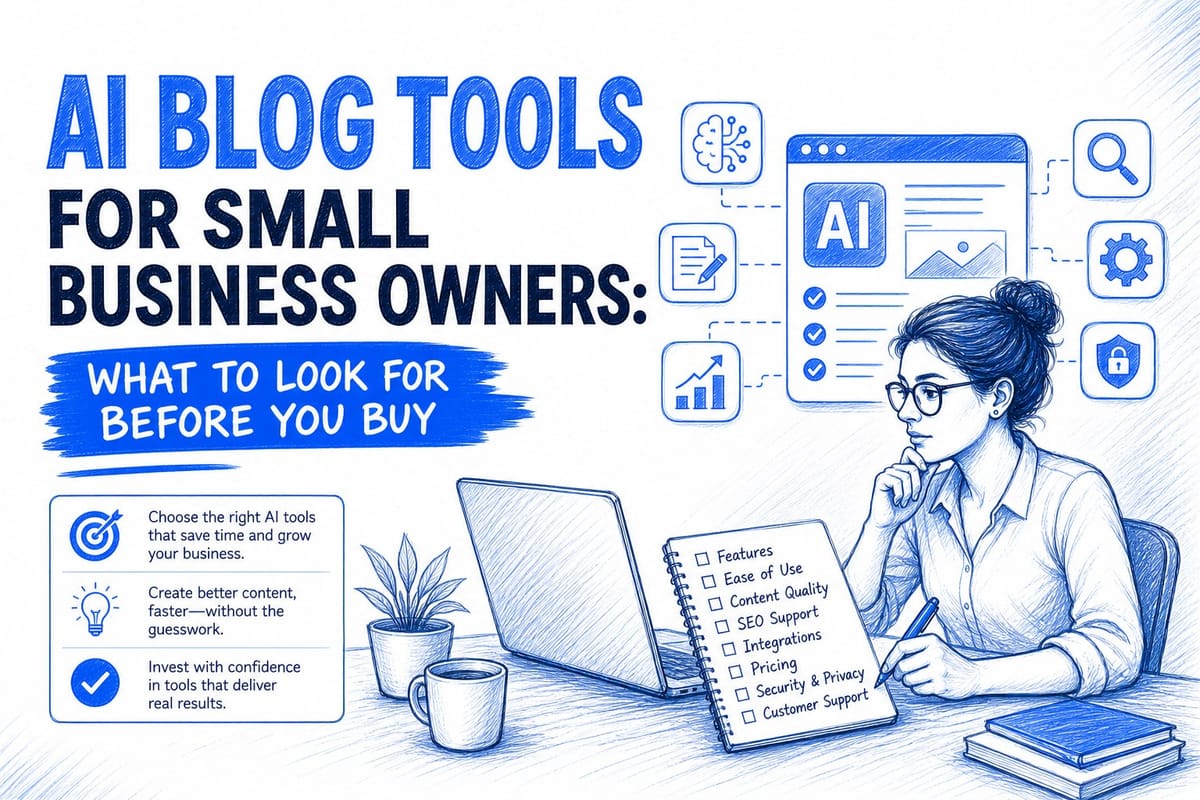
Table of contents
1. What ai blog tools for small business actually do (and what they don't)
2. The features that actually matter when you are comparing tools
3. How to evaluate whether a tool will actually help your business grow
If you run a small business, you already know the struggle. You need a blog to rank on Google, build trust with potential customers, and stay visible in a crowded market. But writing takes time you do not have, hiring writers costs money you may not want to spend, and finding a tool that actually does the job well is harder than it sounds. The market for ai blog tools for small business is growing fast, and the options range from genuinely useful to wildly overhyped. Before you spend a dollar or sign a contract, here is what I think every small business owner should understand about how these tools work, what separates the good ones from the bad ones, and how to make a smart buying decision.
What ai blog tools for small business actually do (and what they don't)
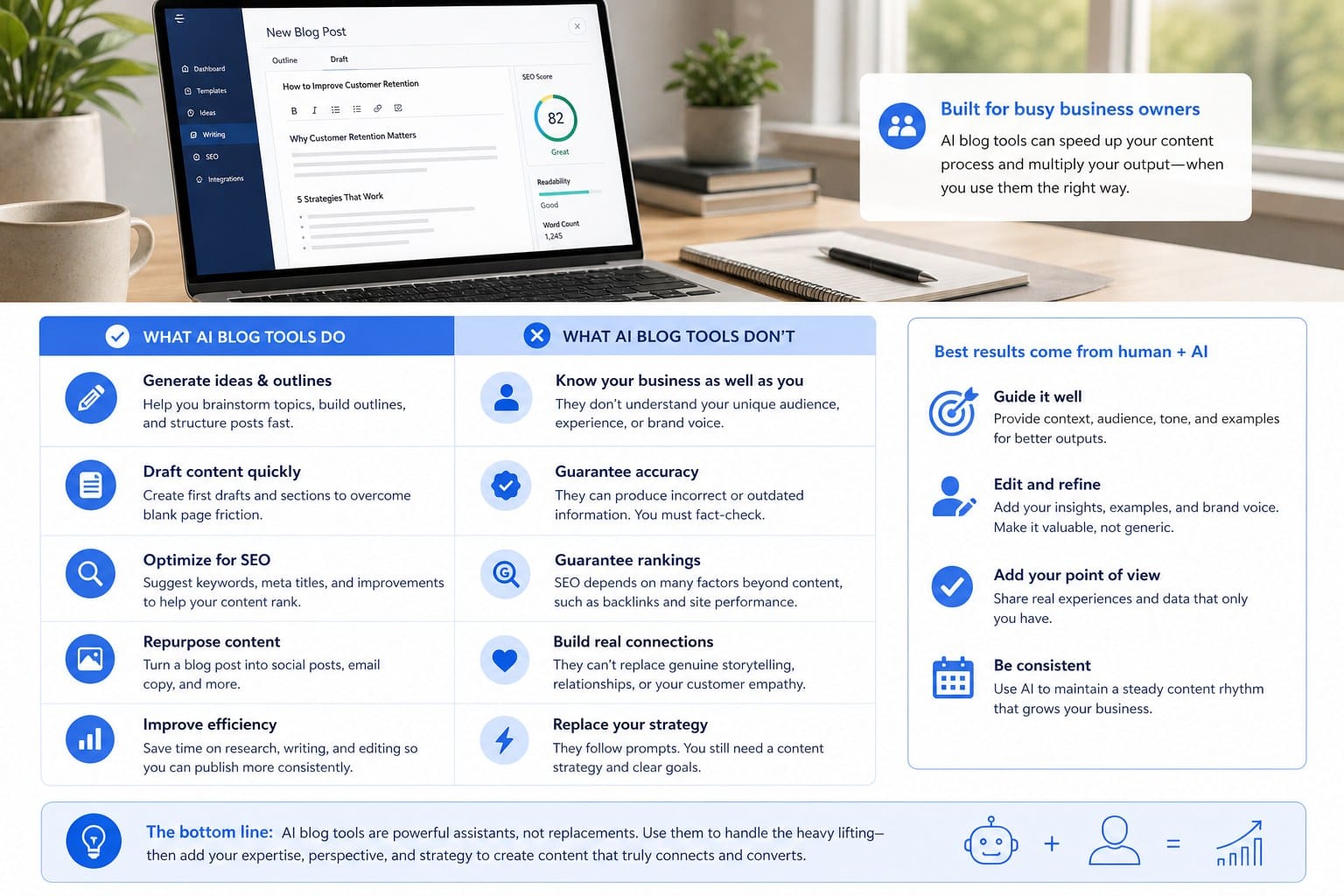
Let's start with a clear picture of what you are buying when you invest in an AI blog tool. At the most basic level, these tools use large language models to generate written content based on prompts you give them. You type in a topic, choose a tone, maybe add a few keywords, and the tool produces a draft. That is the entry-level version, and it is what most people think of when they hear 'AI writing tool.'
But the category has evolved a lot. Today, the better AI blog tools for small business go well beyond generating a single draft. They can build out a full content calendar, suggest topic clusters based on what your competitors are ranking for, produce long-form articles that are structured for SEO, and even publish directly to your website without you touching a file. That is a very different product from a basic text generator, and it is worth knowing which type you are looking at before you commit.
Here is the distinction I find most useful. A text generator helps you write faster. A content engine helps you publish consistently. For small business owners, consistency is usually the bigger problem. It is not that you cannot write one good blog post. It is that writing one good post every week, researching the topic properly, formatting it correctly, adding visuals, and publishing it without breaking your site, that is where things fall apart. So when you are evaluating tools, ask yourself which problem you are actually trying to solve.
Another thing worth understanding is what AI blog tools cannot do reliably on their own. They cannot replace genuine expertise or first-hand experience. Google's helpful content guidelines are increasingly focused on rewarding content that demonstrates real knowledge, not just content that sounds authoritative. A good AI tool should make it easier for you to share your expertise, not substitute for it entirely. If a tool promises to fully automate your content with zero human input and produce results that crush your competition, treat that claim with healthy skepticism.
What the best tools do is handle the tedious, time-consuming parts of content production: keyword research, content structure, first drafts, formatting, image selection, and publishing workflows. They free up your attention for the parts that require your actual knowledge and judgment. That balance is what makes a tool worth paying for.
I also want to address something that gets glossed over in most reviews. AI-generated content still requires a human layer of quality control. The tools that acknowledge this openly and build review steps into their workflow are generally more trustworthy than the ones that promise a completely hands-off experience. As a small business owner, your reputation is attached to everything that goes out under your name. A tool that helps you publish faster is valuable. A tool that publishes content you have never reviewed is a risk.
One more thing to understand about this category: the tools built specifically for blogging are different from general-purpose AI assistants. A general assistant can help you draft an email, write a product description, or summarize a document. A dedicated blog tool is designed around the specific workflow of researching, writing, structuring, and publishing articles. For small business owners who want a consistent blog output without building a whole content team, the specialized tools tend to deliver better results because they are solving a specific problem rather than a general one.
The features that actually matter when you are comparing tools
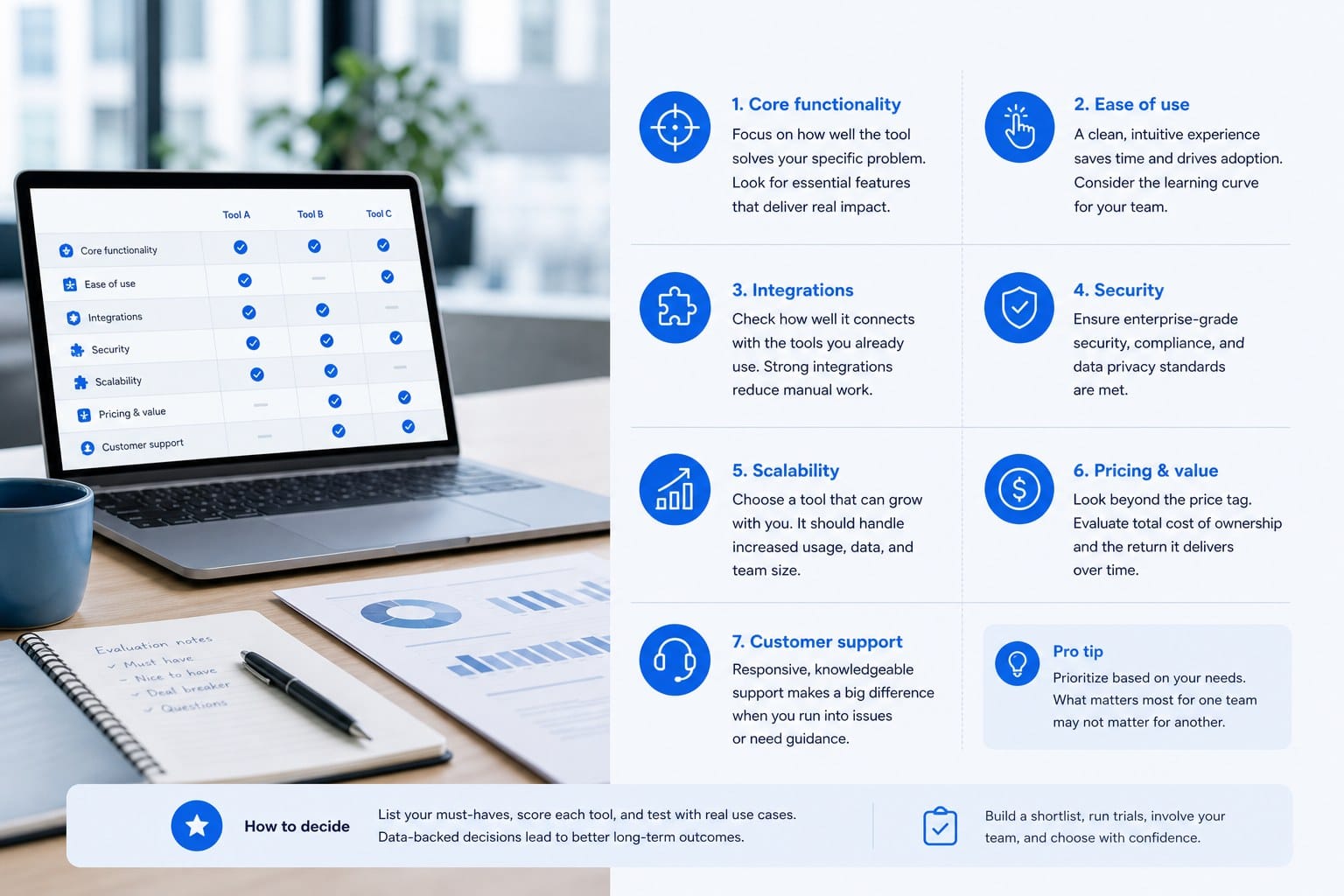
Once you understand what category of tool you are looking at, the next step is knowing which features are genuinely useful and which are just nice-sounding bullet points on a landing page. I have seen a lot of feature lists, and in my experience, the following areas separate the tools worth buying from the ones that will collect dust after the first month.
Content strategy, not just content generation. A single article does not build organic traffic. A consistent strategy does. The tools that help you map out a full content plan, identifying what topics to cover, in what order, and how they relate to each other, give you a much better foundation than tools that only help you write one piece at a time. If you want to understand why this matters at a deeper level, it is worth reading about what is a blog content strategy and why every brand needs one. The short version is that a coherent strategy creates compounding returns over time. Individual posts without a strategy just sit there.
Research depth and factual accuracy. This is a big one. Many AI writing tools generate text that sounds accurate but contains subtle errors, outdated information, or invented statistics. For a small business owner, publishing a post with a wrong claim can hurt your credibility with readers and with Google. Look for tools that pull from real, verifiable sources and that show you where their information comes from. If a tool generates a 2,000-word article with zero source references in under 30 seconds, that is a red flag. Good research takes time, even when a machine is doing it.
SEO structure built in. Writing a good article and writing an article that ranks on Google are related but not identical skills. The technical side of SEO, things like proper heading hierarchy, keyword placement, meta descriptions, internal linking suggestions, and appropriate content length, matters. A tool that generates readable prose but ignores these elements will leave you doing a lot of manual cleanup before your content is actually useful for search. Look for tools that build SEO best practices into the output by default, not as an afterthought.
On-brand visuals. Blog posts without images tend to perform worse in terms of time-on-page and social sharing. But finding, licensing, and placing images is another time-consuming step that most small business owners skip or rush. Tools that generate or source relevant visuals and place them appropriately within the content remove one more friction point from your workflow.
Direct publishing integration. This is where a lot of tools fall short. They will generate a great draft, but then you still have to copy and paste it into your CMS, reformat it, check that nothing broke, add your SEO settings manually, and hit publish yourself. That is not a workflow problem solved; it is just a writing problem solved. For small business owners who want genuine automation, direct publishing integration is a must-have. If your website runs on Ghost, for example, you want a tool that connects natively and can publish without you opening a tab. Tools that offer this kind of integration, as explored in Ghost CMS integrations that enable automated publishing at scale, are in a different tier of usefulness than tools that stop at the draft stage.
Content calendar and scheduling. Consistency is the biggest predictor of blog success for small businesses. A tool that helps you plan 30 days of content in advance and schedules it for automatic publication takes the weekly decision-making off your plate. This matters more than most people realize. When blogging is easy and automatic, you do it consistently. When it requires effort every single week, it gets deprioritized the moment business gets busy.
Customization for your brand voice. Generic AI content is easy to spot, and readers notice it. The best tools let you define your brand voice, whether that is professional and authoritative, casual and conversational, or somewhere in between, and apply it consistently across all generated content. Some tools let you train on existing content you have written so the output sounds like you. This is worth looking for, especially if your brand voice is a meaningful part of how you differentiate yourself.
Simplicity and time-to-value. I want to flag this one because it often gets underweighted in comparison reviews. A tool with 50 features that takes three weeks to set up is not a good tool for a small business owner with limited time. The best tools in this space are designed so that someone without a marketing background can get up and running quickly and start seeing output within the first session. If the onboarding process feels like learning a new piece of enterprise software, it is probably not built for small business.
Pricing that makes sense at your scale. Many AI content tools are priced for agencies or enterprise marketing teams. They offer unlimited seats, white-label options, and complex tier structures that do not map to what a small business actually needs. Look for tools with transparent pricing, a clear sense of what you get at each tier, and the ability to cancel or downgrade without a complicated process. A free trial or money-back period is a good sign that the company believes you will see value quickly.
How to evaluate whether a tool will actually help your business grow
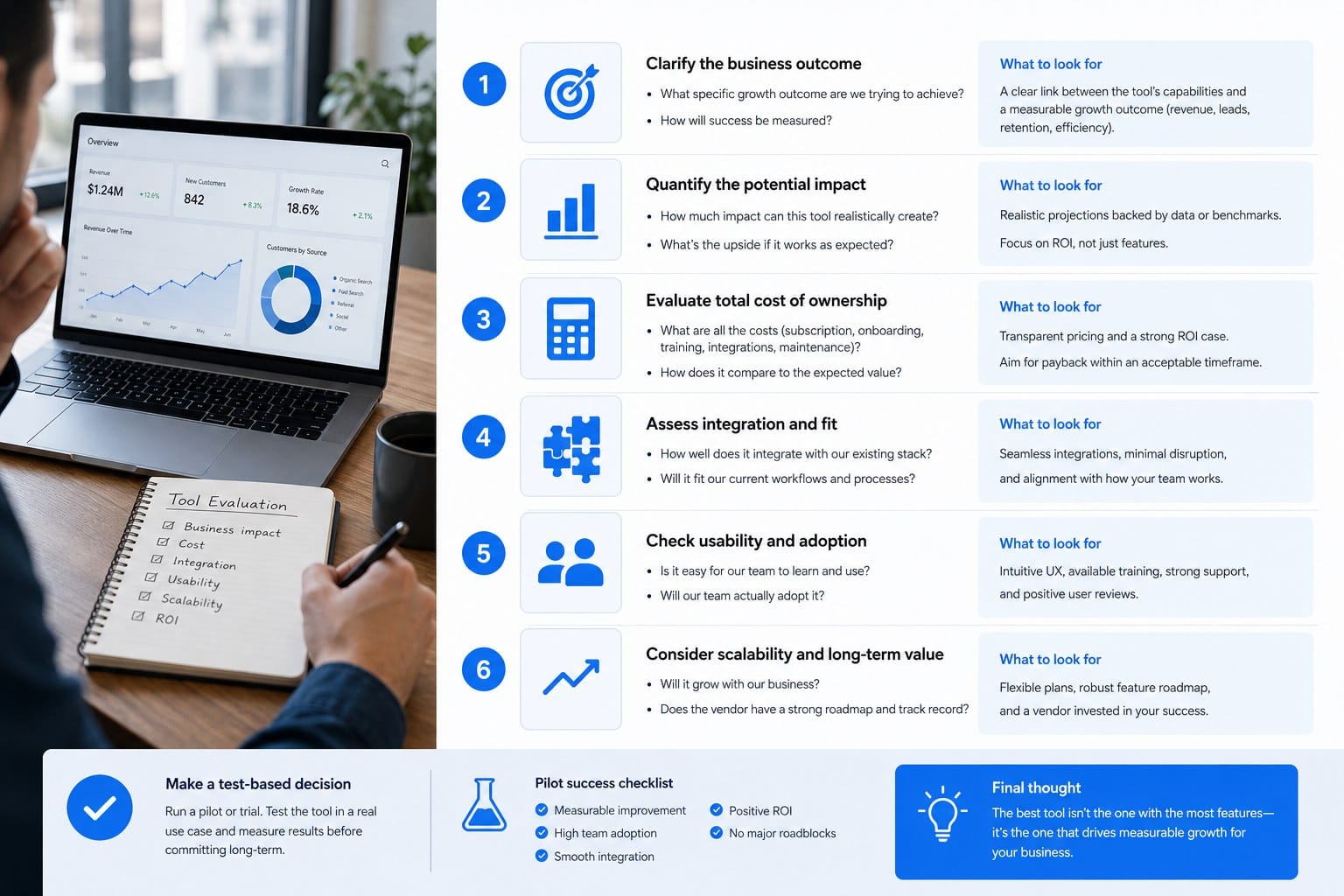
Knowing what features to look for is useful, but the final question is always the same: will this tool actually help my business grow? That is a harder question to answer, and it requires thinking beyond feature checklists.
The first thing I look at is whether a tool is built around outputs or outcomes. An output is a blog post. An outcome is more organic traffic, more leads, more customers who found you through search. A lot of AI blog tools are optimized for outputs. They make it fast and easy to produce content. But if that content is not well-researched, properly structured, and part of a coherent strategy, it does not produce outcomes. It just produces content.
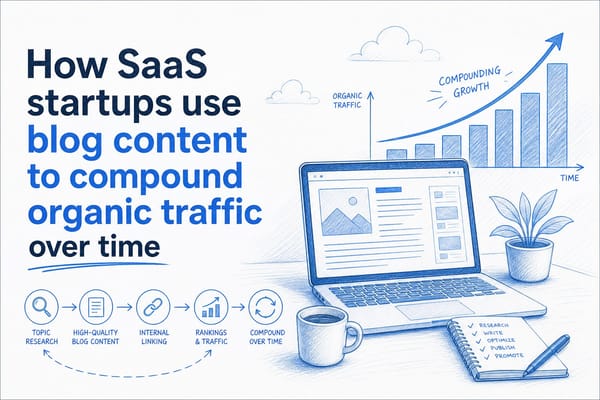
For small business owners, the goal is almost always organic traffic growth. Blog content is one of the most cost-effective ways to build that traffic because a good post can rank and drive visitors for years without ongoing ad spend. But this only works if the content is genuinely useful, well-optimized, and published consistently over time. The compounding effect of blog content is real, as explored in depth in how SaaS startups use blog content to compound organic traffic over time, and the same principles apply to small businesses in any industry. You are building an asset, not running a one-time campaign.
This is why strategy matters as much as production. A tool that generates 30 days of content based on a coherent topic strategy, targeting keywords your potential customers are actually searching for, will outperform a tool that lets you write faster but leaves the strategy entirely up to you. Most small business owners are not SEO experts, and expecting them to build a solid content strategy from scratch while also running their business is unrealistic. The best tools take that burden off your plate.
Next, I think about whether the tool produces content you would actually be comfortable publishing. This is a subjective test, but it is important. Read the output carefully. Does it sound like something a real person with real knowledge wrote? Does it make specific, accurate claims, or does it deal in vague generalities? Does it address the specific concerns and questions of your target audience, or does it just cover the topic at a surface level? The gap between content that gets published and content that actually helps readers and ranks on Google is significant, and you can usually feel it when you read a draft.
Another way to evaluate a tool is to look at what happens after the content goes live. Good AI blog tools give you some way to track performance, whether that is through built-in analytics, integration with Google Search Console, or at minimum a clear structure for posts that makes them easy to monitor. If a tool has no mechanism for helping you understand whether your content is working, you are flying blind.
I also recommend thinking about how the tool fits your actual workflow. If you currently have no blog workflow at all and you are starting from scratch, a tool that handles everything from strategy to publishing is likely your best starting point. If you already have a writer or a partial workflow, you might want something that slots into what you already do, handling the parts that take the most time while leaving your existing process intact.
Here is a practical test I suggest for any AI blog tool you are seriously considering. Find a topic that is relevant to your business and that you know something about. Run it through the tool and read the output carefully. Does the article demonstrate real understanding of the topic? Are the recommendations or explanations accurate from your own knowledge? Is the structure logical, with a clear flow from introduction to conclusion? Would you send this to a customer or prospect without feeling embarrassed? If you answer yes to those questions, the tool is probably worth exploring further. If the output feels generic, inaccurate, or like it was clearly written by a machine just filling space, move on.
One thing I want to address specifically for small business owners is the question of time investment. The whole point of an AI blog tool is to save time. But some tools require a significant setup and learning curve before they deliver on that promise. When I think about the ideal tool for a small business owner, I am thinking about someone who can get a 30-day content plan and their first published article within a few hours of signing up. That is the benchmark. If a tool requires weeks of setup, template building, training, and configuration before it produces usable content, it is not saving you time in any near-term sense.
Finally, think about support and reliability. AI tools have downtime, produce occasional errors, and sometimes need a human to intervene. A tool backed by a responsive support team that actually helps you solve problems is worth more than a slightly cheaper tool where you are on your own when things go wrong. Read reviews that specifically mention customer support, not just product quality. For a small business owner who is not a technical expert, knowing that help is available when you need it makes a real difference.
Blogtude was built with exactly these concerns in mind. It generates a 30-day content strategy tailored to your brand, produces deeply researched long-form articles with on-brand visuals, and publishes automatically to Ghost and other CMS platforms. The goal is to give small business owners the consistent, high-quality blog output they need to grow organic traffic, without requiring them to become content marketers or manage a team of writers. If you are a small business owner looking for a smarter way to maintain a blog, it is worth taking a look at what a purpose-built content engine can do for you.
Ready to take the next step?
Ready to stop struggling with your blog and start publishing consistently? Visit Blogtude to see how a 30-day content strategy and automated publishing can work for your business.