
Outrank.so alternatives: the best AI blog tools to replace it


Table of contents
1. What most people actually need from an AI blog tool
2. A realistic look at the outrank alternatives on the market
3. Why Blogtude is worth a close look as your next tool
If you have been using Outrank.so and something feels off, you are not alone. A lot of bloggers, SaaS founders, and small business owners start with one AI writing tool and quickly realize it does not quite cover everything they need. Maybe the articles feel thin. Maybe there is no real publishing workflow. Maybe the content strategy is still on you. Whatever the reason, searching for outrank alternatives is a smart move, and this guide walks you through what your options actually look like, what each one does well, and where Blogtude fits into the picture for people who want a full content engine, not just a text generator.
What most people actually need from an AI blog tool
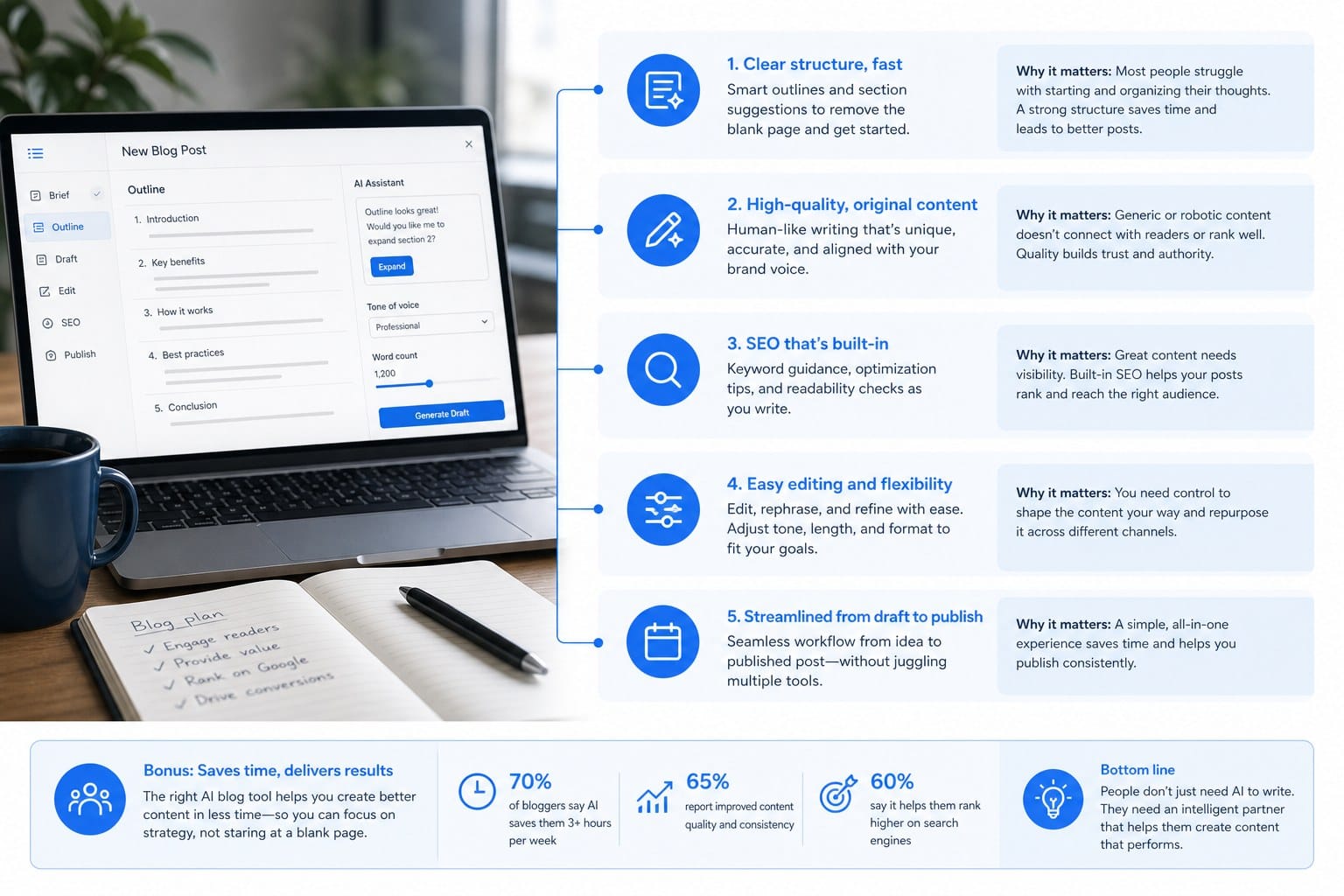
Before we compare tools, it helps to get clear on what a good AI blog tool should do. A lot of people assume they need a faster way to write. That is part of it, but writing faster without a strategy just means publishing more content that does not rank or convert. The gap between a decent AI writing assistant and a true content engine is bigger than most people realize.
Here is what a solid AI blog tool should cover from start to finish.
First, it should help you figure out what to write. That means keyword research, topic clustering, and a realistic publishing calendar. Without this, you are guessing. You might write twenty articles and have none of them target topics your audience is actually searching for. A tool that starts with strategy saves you from that trap.
Second, it should produce articles that are actually long and well-researched. Short, surface-level posts used to work for SEO. They mostly do not anymore. Search engines reward content that covers a topic in depth. If your AI tool is spitting out 400-word drafts, that is a problem. The sweet spot for most blog posts targeting competitive keywords is somewhere between 1,500 and 3,000 words, and sometimes longer for pillar content.
Third, it should handle visuals. A wall of text does not perform as well as an article with relevant images, charts, or graphics that support the content. Most AI writing tools stop at the text layer and leave you to source or create images yourself. That is friction, and friction slows down publishing.
Fourth, it should actually publish. Generating a Word doc or a text file and asking you to paste it into WordPress is not a workflow. A real tool connects to your CMS, formats the article properly, and pushes it live or into draft without extra steps on your end.
Fifth, it should be consistent. The whole point of using an AI tool is that you can maintain a steady publishing schedule without it consuming your entire week. If using the tool still requires hours of manual work per post, you have not really solved the problem.
Outrank.so handles some of these things reasonably well. It generates articles, it does some SEO optimization, and it has been popular with solo operators who want to move fast. But depending on your specific situation, it may leave gaps, particularly around publishing automation, visual generation, and long-term strategy. That is exactly where outrank alternatives start to look attractive.
Let me walk through the main categories of tools that people typically consider when they decide to switch, and then we will get into what actually sets Blogtude apart for people who need the whole package.
A realistic look at the outrank alternatives on the market
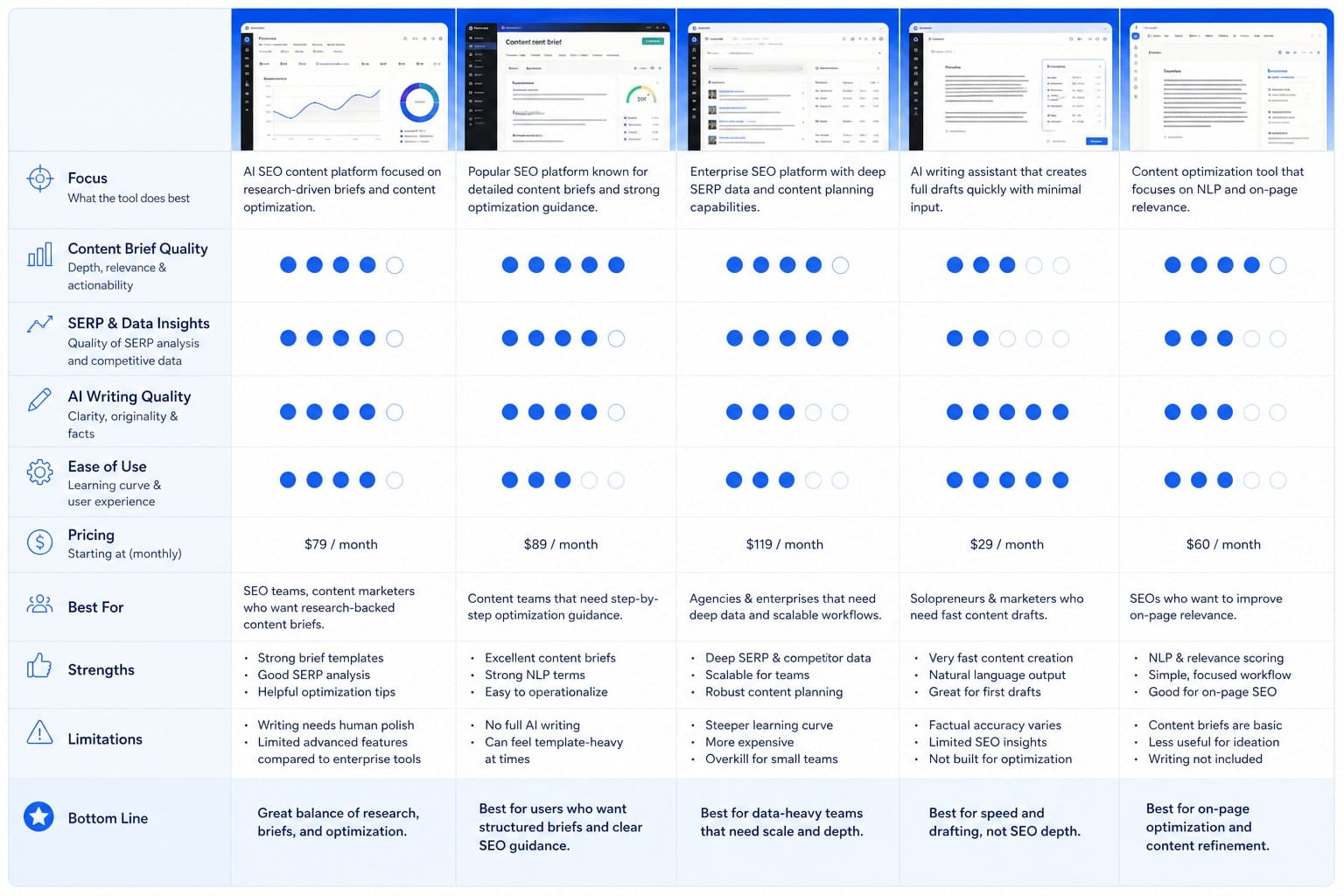
The AI content tool market has grown fast over the last few years. That is good news because there are real choices. It is also a little overwhelming because a lot of tools promise very similar things. Here is an honest breakdown of the main categories and what they actually deliver.
General AI writing assistants
Tools in this category are flexible. You can use them to write blog posts, emails, ad copy, social media content, and more. They are good at generating text quickly based on a prompt. The tradeoff is that they are general-purpose, which means they do not come with a built-in blog strategy, a publishing workflow, or any kind of automation specific to blogging.
If you are already good at SEO and content strategy, a general writing assistant can speed up your drafting. You bring the structure and the keywords, and the tool helps you fill in the content. But if you need the tool to do the thinking for you, general assistants fall short. You still have to figure out what to write about, structure each article, source images, and handle publishing yourself.
These tools are best for: writers who already have a strong content process and just want to draft faster.
SEO-focused content generators
This is the category where Outrank.so sits. These tools are built specifically for blog content. They usually include keyword research, SERP analysis, and article generation that is shaped around ranking signals. Some of them do a genuinely good job of helping you produce content that is structured for search.
The limitations vary by tool. Some produce articles that feel templated and repetitive after a while. Some have weak image support. Many do not actually publish to your CMS. A few are strong on the research side but generate articles that need significant editing before they are ready to go live.
For a small business owner or a solo blogger who does not have a team to review and edit every draft, that editing step is not a minor inconvenience. It is a bottleneck that defeats the purpose of using AI in the first place.
One thing worth noting: a lot of tools in this category focus heavily on optimizing a single article rather than helping you build a coherent content strategy across dozens of posts. For short-term projects, that might be fine. For brands trying to build organic traffic over time, it creates a fragmented content library that lacks the topical authority needed to rank consistently.
Niche blog automation platforms
This is a smaller but fast-growing category. These are tools that go beyond generating text and try to handle the full publishing workflow. They connect to CMS platforms, generate content on a schedule, and reduce the manual steps involved in getting a post from idea to published.
The challenge with niche automation platforms is that quality varies a lot. Some prioritize speed and volume over depth, which can result in content that reads as clearly AI-generated and does not perform well in search. Others do a better job of combining research and depth with automation, but they tend to be more expensive or harder to set up.
This is the category where Blogtude operates, and it is worth explaining in some detail why the approach matters.
What to watch out for in any tool you evaluate
Regardless of which category you are looking at, there are a few red flags worth checking for.
First, look at actual article length and depth. Ask for a sample or a trial, and look at whether the output covers a topic thoroughly or skims the surface. A 600-word article on a competitive topic is not going to rank, no matter how well-optimized the meta description is.
Second, check the image situation. Does the tool generate or source images automatically? If not, that is a step you are still doing manually.
Third, test the publishing integration. Does it actually connect to your CMS, or does it export a file you have to copy and paste?
Fourth, think about strategy. Does the tool help you decide what to write over the next thirty days, or does it only act on requests you make one at a time?
If you find a tool that scores well on all four of those points, you have found something worth taking seriously. Most tools do two or three of them. Very few do all four well, which is why switching costs are real and worth thinking through before you commit to a new platform.
For a detailed look at how Blogtude specifically compares to Outrank.so on these dimensions, this post breaks it down clearly: Outrank.so alternative: why Blogtude may be the better fit.
Why Blogtude is worth a close look as your next tool
Blogtude is built around a specific belief: the reason most brands struggle with consistent blogging is not that they lack writers. It is that the entire workflow, from deciding what to write to actually getting it published, is fragmented and time-consuming. AI writing tools solve one piece of that. Blogtude tries to solve all of it.
Here is what that actually looks like in practice.
A 30-day content strategy that is built for your brand
When you start with Blogtude, the platform does not ask you to come in with a list of keywords and a content calendar already built. It builds that for you. Based on your niche, your audience, and your SEO goals, it generates a 30-day content strategy with article topics, target keywords, and a publishing sequence that makes sense from a topical authority standpoint.
This matters more than it might seem at first. Topical authority is about covering a subject comprehensively across multiple related articles, not just writing one good post. When a site has ten well-structured articles that all relate to the same core topic, search engines treat that site as a credible source on that topic. That translates into better rankings for all of those articles, not just the most recent one.
Most AI tools do not think about your content library as a whole. They optimize one article at a time. Blogtude starts at the strategy layer and works down from there, which means every article fits into a bigger plan.
Long-form, deeply researched articles
The articles Blogtude produces are not short. They are built to cover topics in a way that satisfies both search intent and reader expectations. For most topics, that means articles that are genuinely comprehensive, structured with clear headings, and written in a voice that fits your brand.
The research layer is real. The platform does not just generate content based on a topic phrase. It draws on current information about the subject to make sure the content is accurate and relevant. That is important for credibility, especially for SaaS companies and small businesses where the blog represents the brand.
For a concrete example of what well-structured long-form content looks like in practice, the breakdown of how Cabin Plus structures its blog for maximum SEO impact is worth reading. It shows how article structure and topic sequencing work together to build search visibility over time.
On-brand visuals, included
This is one of the parts that surprises people most. Blogtude generates visuals that go with each article. That means you are not spending an hour searching stock photo sites or trying to describe what you need to a separate image tool. The visual layer is part of the same workflow.
For brands that care about how their blog looks, not just how it reads, this removes a real bottleneck. A post with no images or generic stock photos gets less engagement and often gets fewer social shares. Articles with relevant, on-brand visuals perform better across the board.
Direct publishing to Ghost and other CMS platforms
Blogtude connects directly to Ghost and other CMS platforms. When an article is ready, it goes live, or into draft, without you opening your CMS, pasting content, uploading images, or setting up categories. That is the full workflow handled.
For Ghost CMS users specifically, this integration is a significant advantage. Ghost is a powerful platform that is especially popular with independent bloggers, newsletter writers, and brands that care about content quality and reader experience. Having an AI content engine that integrates natively with Ghost removes one of the biggest friction points for that audience.
Who Blogtude is actually for
Blogtude works best for a specific set of people. If you recognize yourself in any of these descriptions, it is worth trying.
Independent bloggers who want to scale their output without hiring writers or editors. You have a voice and a niche, but you cannot physically write and publish as much as you need to in order to grow traffic. Blogtude handles the volume while you stay focused on the direction.
SaaS founders who understand that content is a long-term growth channel but do not have time to manage it themselves. A consistent, well-structured blog builds organic traffic over months and years. Blogtude makes that possible without hiring a full content team.
Small business owners who know they should be blogging regularly but keep deprioritizing it because it takes too long. When the entire workflow is automated, the barrier to consistency drops dramatically.
Digital marketers managing brand blogs across multiple clients or channels. Blogtude gives you a reliable, repeatable process that does not depend on a writer's availability or creative bandwidth.
Ghost CMS users who want an integrated publishing solution. If your site runs on Ghost, Blogtude is built for you in a way that most other tools are not.
What it is not
Blogtude is not a general-purpose AI writing assistant. If you need a tool that helps you draft emails, write product descriptions, or generate social captions alongside your blog content, you will want to keep a separate tool for those tasks. Blogtude is focused specifically on the blog publishing workflow, and that focus is a feature, not a limitation. It means every part of the product is built around making that one workflow as good as it can be.
It is also not a tool that produces low-quality content at high volume just for the sake of publishing frequently. The goal is to produce articles that are genuinely worth reading and genuinely worth ranking, at a cadence that keeps your blog active and growing.
Making the switch from Outrank.so
If you have been using Outrank.so and you are evaluating outrank alternatives because the tool is not covering your full workflow, the transition to Blogtude is straightforward. You bring your niche, your audience description, and your publishing goals. Blogtude builds the strategy from there and starts producing content against that plan.
You do not need to migrate old content or rebuild anything from scratch. The platform works forward from wherever you are right now.
For Spanish-language audiences or brands that publish in Spanish, Blogtude also supports that use case, as covered in this post: Blogueando con inteligencia artificial: publica sin esfuerzo.
The core value here is not just that Blogtude writes articles. It is that Blogtude removes the need for you to manage the content operation yourself. For anyone who has spent hours researching keywords, outlining articles, writing drafts, finding images, and manually publishing posts, that is a meaningful shift in how you spend your time and what your blog is able to produce.

Ready to take the next step?
If you are ready to stop piecing together your content workflow from multiple tools and start publishing consistently without the manual work, Blogtude is worth a closer look. Visit https://blogtude.com to see how the platform builds your content strategy and handles publishing from start to finish.


