Who small business owners really are and what drives them

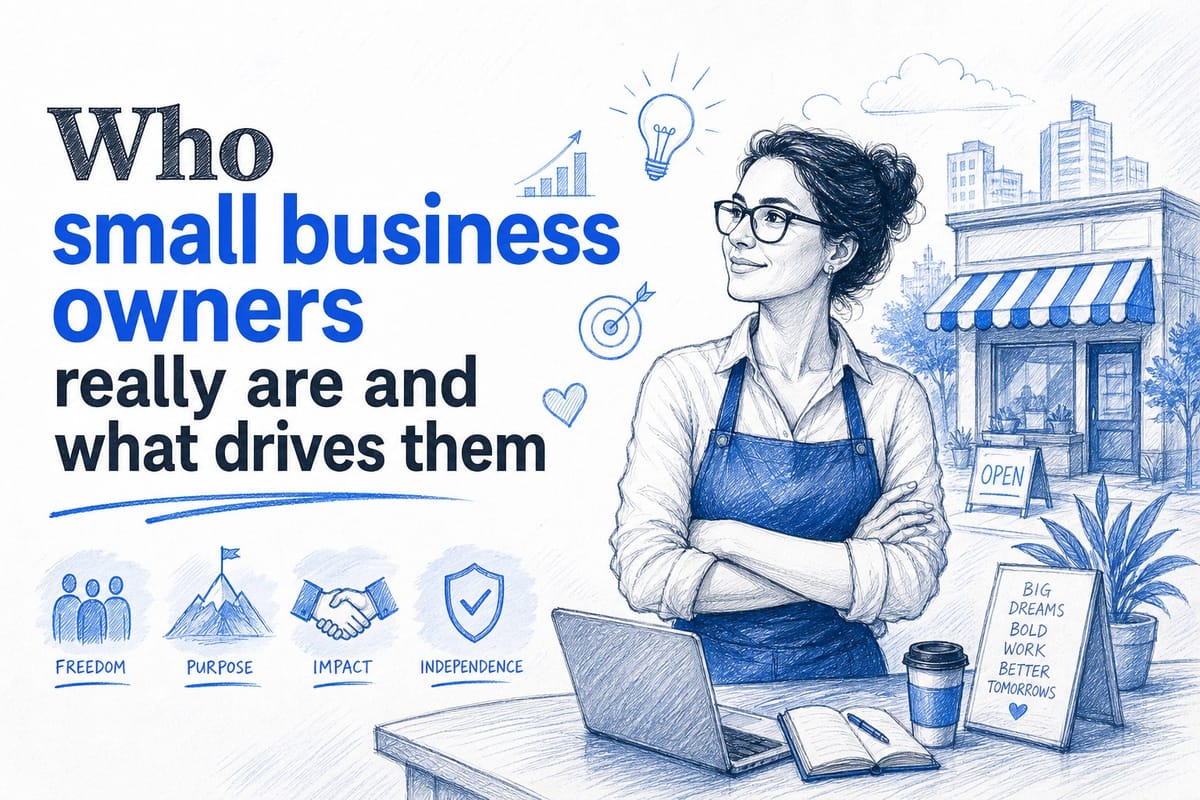
Table of contents
1. Who small business owners really are
2. What actually drives small business owners
3. What small business owners need to grow
When people picture a small business owner, they often imagine someone behind a bakery counter or running a local hardware store. That image is not wrong, but it is incomplete. The reality of who small business owners are today is far more varied, more driven, and frankly more interesting than any single stereotype can capture. I want to dig into that reality, because understanding who these people are, what motivates them, and what challenges they actually face matters, especially if you are trying to build content, products, or services that genuinely help them. So let's look at the full picture.
Who small business owners really are
The U.S. Small Business Administration defines a small business as an independent firm with fewer than 500 employees. That definition covers an enormous range of people. It includes the solo freelance designer working from a kitchen table, the three-person landscaping crew, the regional accounting firm with 80 staff, and the e-commerce brand shipping products out of a spare bedroom. When you ask who are small business owners, the honest answer is: almost everyone who has ever decided to build something on their own terms.
In the United States alone, there are more than 33 million small businesses. They account for roughly 99.9 percent of all businesses in the country and employ about 46 percent of the private workforce. Those are not abstract numbers. That is your neighbor who opened a yoga studio. That is the person at your co-working space building a niche software tool. That is the immigrant family running a restaurant that has become a neighborhood institution.
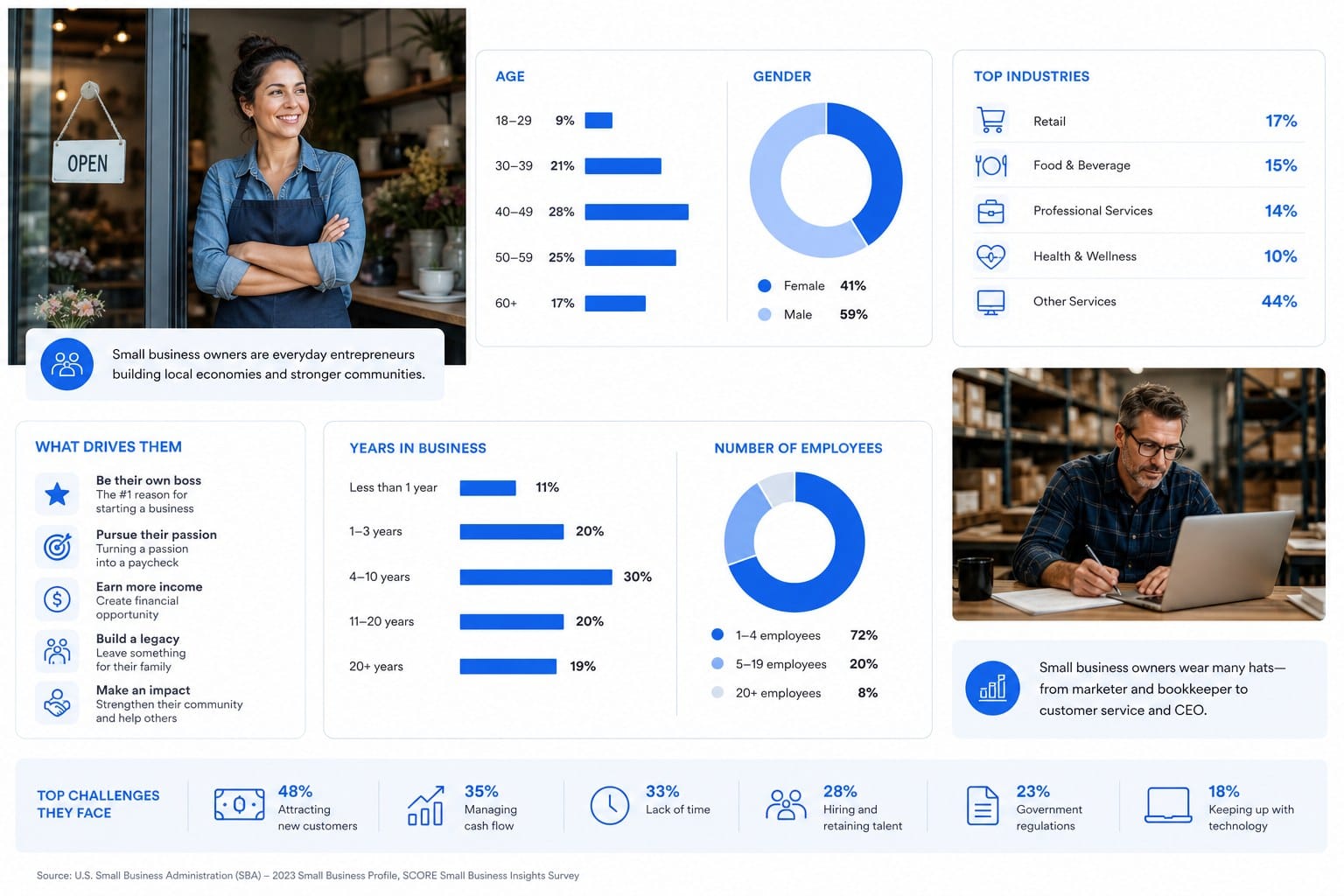
Demographically, small business ownership has become more diverse over the past two decades. The number of minority-owned businesses grew significantly in the years leading up to and following the 2020 pandemic. Women own roughly 40 percent of all small businesses in the United States. Veterans start businesses at higher rates than the general population. Young entrepreneurs in their twenties are launching companies straight out of college, and people in their fifties and sixties are starting businesses after leaving corporate careers. There is no single profile.
That said, a few traits do show up consistently across research on small business owners. Most are deeply hands-on. They are not delegating strategy to a team of executives. They are the ones answering emails at 10 p.m., posting on social media between client calls, and trying to figure out how to do marketing, operations, and finance all at once. This is important context. When you understand how stretched small business owners typically are, you start to understand why so many of their problems come down to time and capacity rather than motivation or intelligence.
Most small business owners also did not start with a business background. A large percentage come from their industry first. A chef opens a restaurant. A personal trainer launches a gym. A software developer builds a product. They became business owners because they had a skill or an idea, not because they studied entrepreneurship. That means many of them are learning business fundamentals, including marketing, on the job and often under pressure.
It is also worth noting that small business owners span every industry imaginable. Construction, retail, professional services, health care, technology, agriculture, food and beverage, education, media, and creative fields all have enormous small business populations. The person running a boutique PR firm and the person running a small plumbing company are both small business owners. Their day-to-day lives look completely different, but the underlying pressures of running a small operation often feel very similar.
One more dimension worth naming: geography. Small businesses are not just a big-city phenomenon. They are the economic backbone of rural towns, small suburbs, and mid-size cities. In many communities, small businesses are the primary employers and the main reason the local economy functions at all. This geographic spread means that small business owners experience wildly different market conditions, customer bases, and infrastructure realities depending on where they operate.
So when we talk about who small business owners are, we are really talking about a massive, diverse, and deeply committed group of people who are united more by mindset and circumstance than by any shared background or industry.
What actually drives small business owners
Motivation matters. If you want to understand small business owners, you need to understand why they do what they do, because the reasons are often more nuanced than the popular narrative of chasing profit or following a passion.
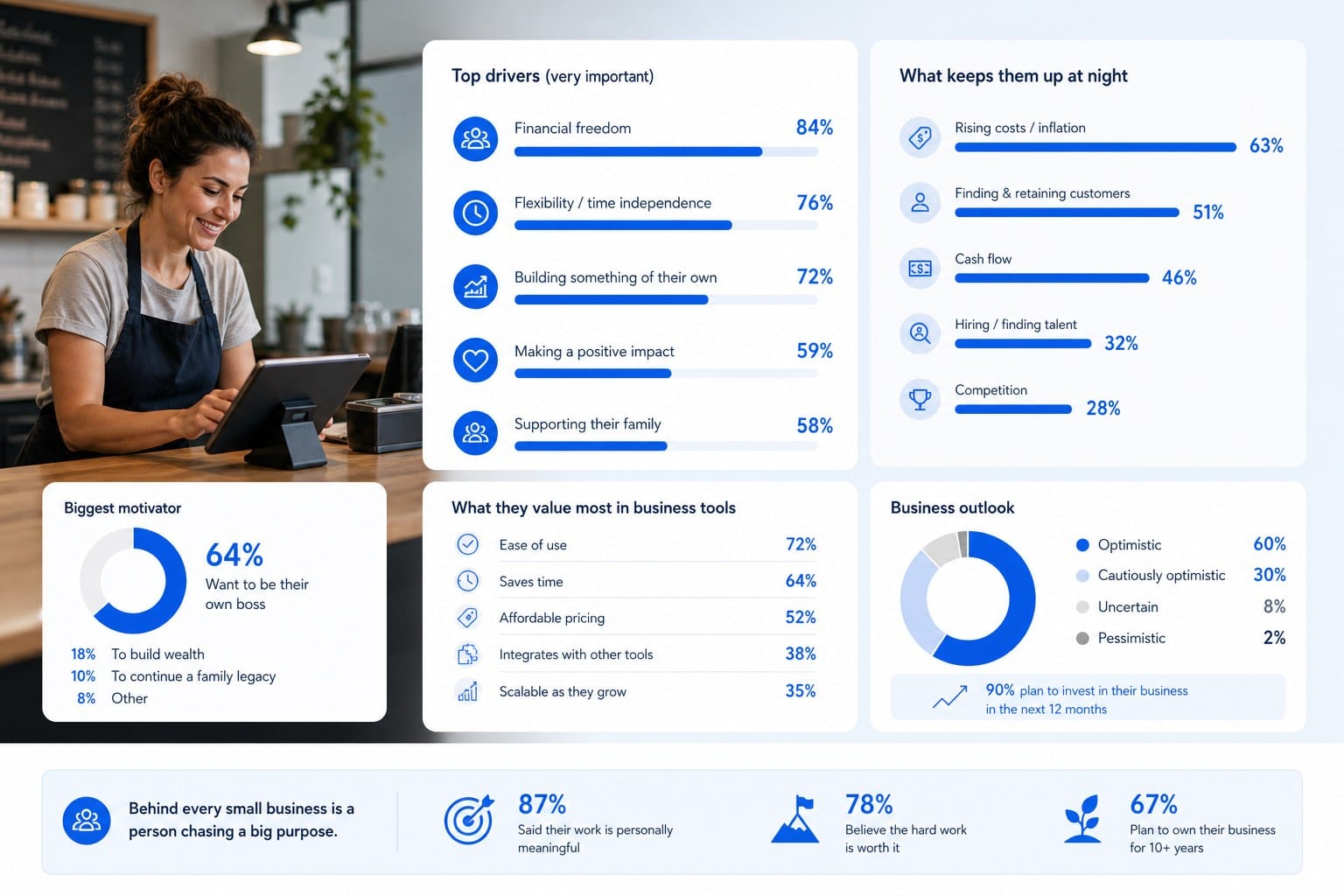
Freedom is consistently one of the top motivators. In survey after survey, small business owners cite the ability to be their own boss, set their own schedule, and make their own decisions as a primary reason they started their business. But this is not just about freedom from a boss. It is about freedom to build something that reflects their own values and vision. Many small business owners describe a kind of creative and strategic ownership that they could never get working for someone else.
Purpose is another major driver. A significant number of small business owners say they started their business because they wanted to solve a problem they had personally experienced, or because they saw a gap in their community that no one else was filling. A parent who could not find a safe, affordable after-school program starts one. A person who struggled with a health issue and found help through nutrition starts a coaching practice. The business is often an expression of something they care deeply about.
Financial independence plays a role too, but it is more complicated than it looks. Most small business owners are not chasing wealth in the way that might be associated with venture-backed startups. They want financial stability, a good income for their family, and the ability to build something that has long-term value. Some want to create a business they can eventually sell. Others want to pass it to their children. The financial goals vary widely, but very few small business owners describe money as their only motivation.
Legacy is something that comes up frequently, especially among owners who have been running their business for more than five years. They start to think about what they are building, not just for themselves, but for the people who work for them and the community around them. A small manufacturing company might employ 30 people from the same town for decades. The owner feels a genuine responsibility to those people and to keeping the business going.
Community connection is also a real driver, particularly for locally focused businesses. Many small business owners describe a deep satisfaction in being part of their community, in being the place people turn to, in sponsoring the local little league team or knowing their customers by name. This is not something you get when you work for a large corporation. It is something specific to operating at a human scale.
That said, the daily reality of running a small business can grind against these deeper motivations. Research consistently shows that small business owners work long hours. Many report working more than 50 hours a week, with a significant percentage working more than 60. They often sacrifice vacations, weekends, and personal time, especially in the early years. Burnout is a real risk, and it is not because they lack passion. It is because running a small business demands so much from one person or a very small team.
The administrative and operational burden is significant. Small business owners spend enormous amounts of time on tasks that do not directly generate revenue: bookkeeping, compliance, scheduling, customer service, and increasingly, digital marketing and content creation. These are not glamorous parts of running a business, but they are essential, and they take up more time than most people outside of small business ownership realize.
Content and marketing is a specific area where I see this tension play out constantly. Small business owners know they need to be visible online. They know that blogging, social media, email newsletters, and SEO matter. But actually doing those things consistently requires time they often do not have and skills they may not have developed. The result is that many small business owners have a marketing strategy that exists more in intention than in practice. They know what they should be doing. They just cannot find the hours to do it.
This is one reason why tools and systems that reduce the time cost of consistent marketing genuinely resonate with small business owners. It is not about laziness. It is about acknowledging that there are only so many hours in a day, and the people running small businesses are already stretched incredibly thin. When something can take a real task off their plate without sacrificing quality, that is not just convenient. It is meaningful.
Financial stress is another consistent theme. While many small business owners eventually build stable, profitable businesses, the early years are often financially precarious. Cash flow problems are one of the leading causes of small business failure. Owners often go without paying themselves for months. They carry the weight of making payroll, paying suppliers, and managing unpredictable revenue, all at the same time. This financial pressure shapes how they make decisions, including how they prioritize marketing, technology investments, and operational changes.
Despite all of this, the data on small business owner satisfaction tells a striking story. The majority of small business owners say they would do it again. They report higher levels of job satisfaction than most employees, even when they are working harder and earning less than they would in a comparable corporate role. The autonomy, the purpose, the sense of ownership, and the community connection outweigh the stress for most people who have chosen this path.
What small business owners need to grow
Understanding who small business owners are and what drives them leads naturally to a practical question: what do they actually need to build and sustain a growing business? The answer varies by stage, industry, and individual circumstance, but a few consistent needs show up again and again.
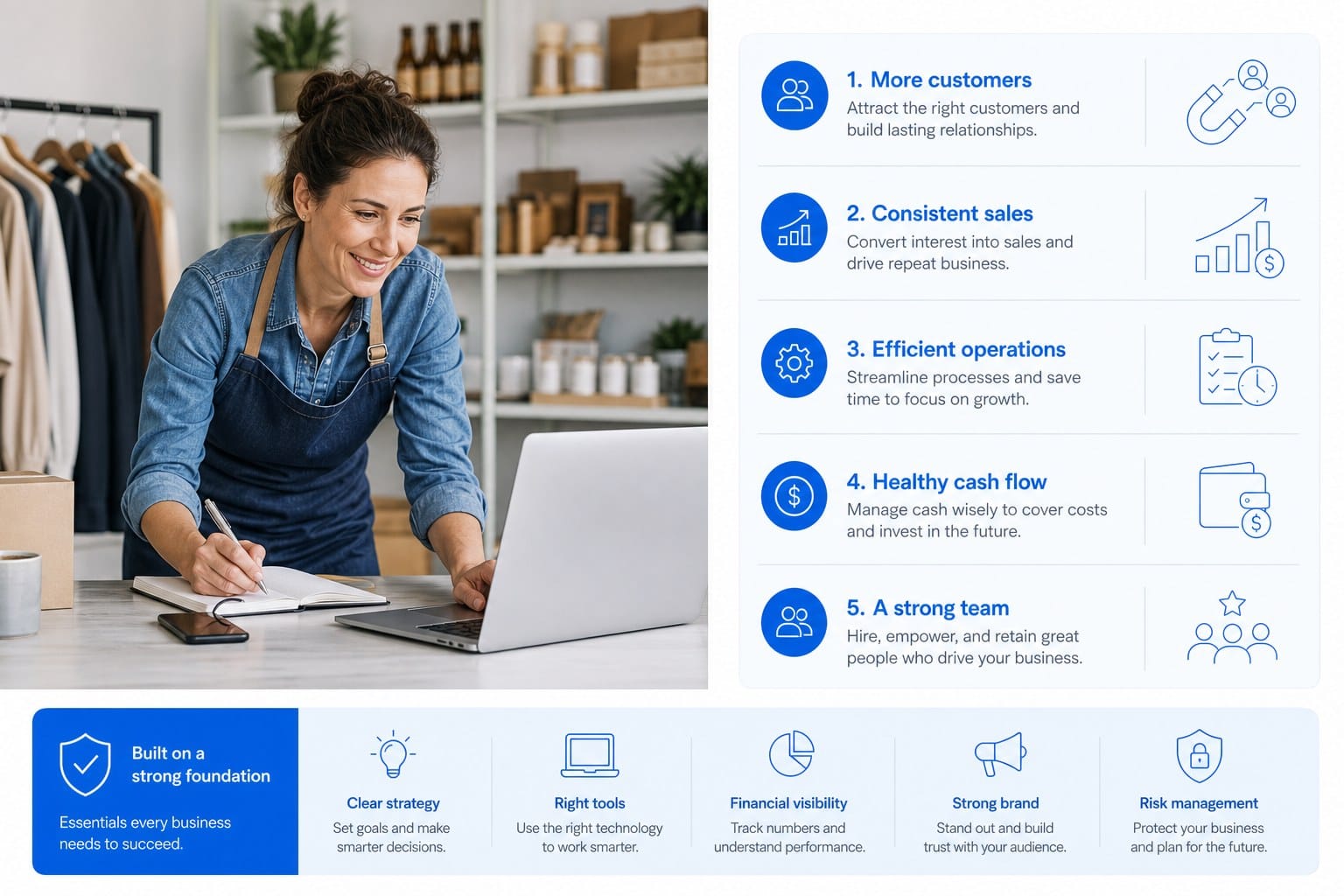
Clarity is one of the most underrated needs. Many small business owners are so deep in the day-to-day that they struggle to see the bigger picture. They need help getting clear on who their customers really are, what their business does better than anyone else, and where they should be focusing their energy. Strategic clarity is not just a luxury for large companies with consultants and planning retreats. It is something every small business needs, and it is often what separates the businesses that grow from the ones that stay stuck.
Consistent marketing is another fundamental need. A small business that does great work but is invisible online is always going to struggle to grow. Referrals and word of mouth are valuable, but they have limits. Organic search traffic, content marketing, and a consistent online presence give a small business the ability to reach new customers who have never heard of them before. This is especially true as more consumer and B2B buying behavior moves online.
Blogging and long-form content is one of the highest-value marketing activities a small business can invest in. A well-written, genuinely useful article that answers a question your target customer is already asking can drive consistent traffic for years. It builds trust before a potential customer ever picks up the phone or sends an email. It positions the business owner as knowledgeable and credible. And unlike paid advertising, it does not stop working the moment you stop paying for it.
But here is the challenge I keep coming back to. Creating that content consistently takes real work. It takes research to understand what topics matter to your audience. It takes skill to write in a way that is clear, useful, and engaging. It takes discipline to publish regularly even when you are busy with everything else. Most small business owners have the knowledge and the ideas. What they lack is the system and the time.
This is exactly where a structured content approach makes a real difference. Having a 30-day content plan laid out in advance, for example, removes the decision fatigue of figuring out what to write about every week. It means the content does not fall off when things get busy, which they always do. If you want to see what that kind of planning looks like in practice, How to build a 30-day blog content strategy without a marketing team walks through a practical framework for putting it together.
Automation is increasingly a core need for small businesses. Not the kind of automation that feels robotic or impersonal, but the kind that handles the repetitive, time-consuming tasks that would otherwise fall on the business owner's plate. Scheduling, publishing, reporting, and workflow management are all areas where the right tools can give back hours every week. Those hours compound over time into real capacity for growth.
Talent and help are also critical, though many small business owners are reluctant to invest in them early enough. Whether it is hiring a first employee, bringing on a contractor, or using a platform that acts as a virtual team member for a specific function, getting help at the right moment can be the difference between a business that scales and one that plateaus because the owner has run out of bandwidth.
Access to good information is another genuine need. Small business owners are often making important decisions about marketing, pricing, hiring, technology, and strategy with limited information and limited time to research. High-quality, specific, practical content that addresses real small business problems has real value. This is one reason why content marketing done well is not just a business growth tactic. It is also a form of genuine service.
Finally, small business owners need community. Running a small business can be isolating, especially for solo operators or very small teams. Having access to peers who understand the specific challenges of small business ownership, who can share what has worked and what has not, and who can offer perspective and encouragement, matters more than it might seem from the outside. This is why small business associations, local chambers of commerce, industry groups, and online communities continue to thrive even as the ways people connect have changed.
What does all of this mean practically? It means that the businesses, tools, and content that genuinely serve small business owners are the ones that take their real situation seriously. Not the idealized version of entrepreneurship you see in highlight reels, but the actual day-to-day reality of a person who is doing five jobs at once, trying to build something sustainable, and looking for ways to do more without burning out.
At Blogtude, that is the lens we bring to everything we build. We are not trying to replace the small business owner's voice or vision. We are trying to give them back the time and consistency they need to let that voice be heard. An AI-powered content engine that generates a full 30-day strategy, produces deeply researched articles with on-brand visuals, and publishes automatically to Ghost or another CMS is not about cutting corners. It is about making sure that a business owner who has something valuable to say can actually say it, consistently, without having to choose between writing blog posts and running their business.
Small business owners are smart, driven, and resourceful. They do not need someone to do their thinking for them. They need the right systems to take execution off their plate so they can focus on the parts of their business that only they can do.
Understanding who these people are, what motivates them, and what they actually need is the starting point for building anything that genuinely helps them grow.
Ready to take the next step?
If you are a small business owner who knows consistent content matters but cannot find the time to make it happen, Blogtude was built for exactly that situation. We generate your full content strategy, write the articles, and publish them automatically so your blog keeps working even when you are focused on everything else. Visit blogtude.com to see how it works.