
Ghost CMS for startups: what to know before you commit

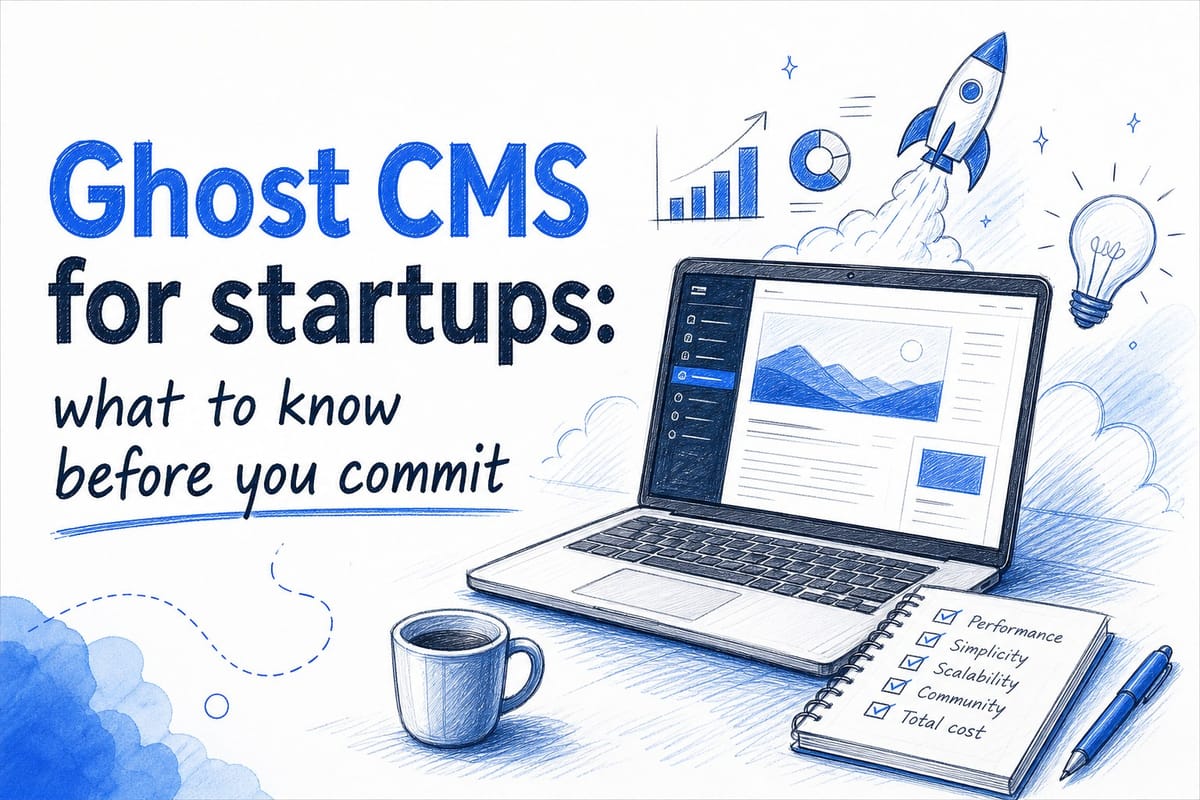
Table of contents
1. What Ghost actually is and why startups are paying attention
2. Where Ghost creates friction for early-stage startups
3. Building a content engine on Ghost that actually scales
If you are evaluating Ghost CMS for startups, you are probably weighing speed, cost, and whether the platform can grow with you. Ghost is a focused publishing platform that strips away a lot of the complexity you find in bigger CMS options. That simplicity is its biggest selling point, but it also comes with real trade-offs you need to understand before you migrate your blog or spin up a new one. I want to walk you through exactly what Ghost does well, where it falls short for early-stage companies, and what you need to think about before you commit your content strategy to it.
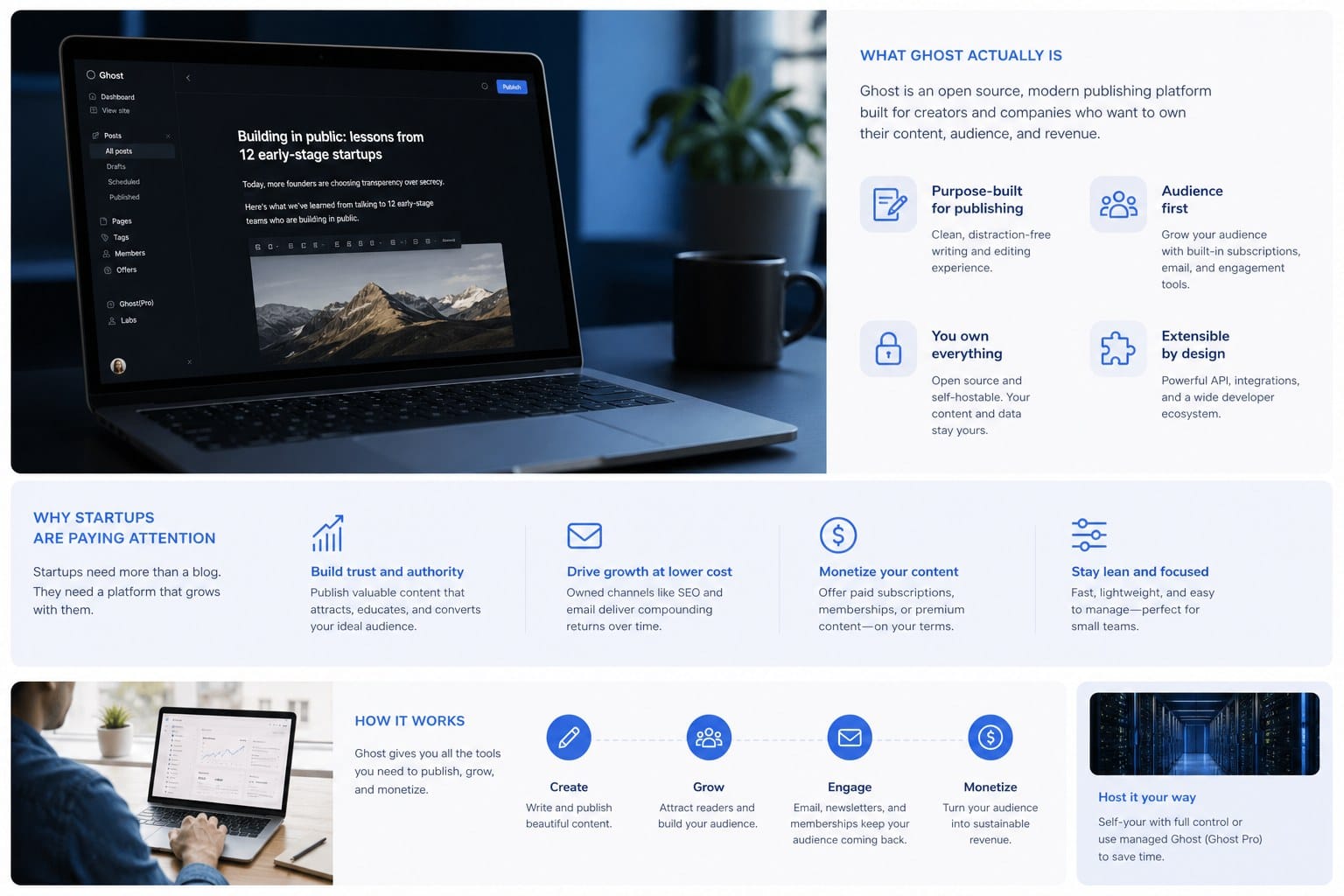
What Ghost actually is and why startups are paying attention
Ghost is an open-source publishing platform built specifically for content-driven businesses. It launched in 2013 as a Kickstarter project and has been developed by the nonprofit Ghost Foundation ever since. That nonprofit structure matters because it means the platform is not chasing venture capital returns or pivoting to chase enterprise deals. The roadmap stays focused on publishing.
The core promise is clean, fast blogging with built-in SEO tools, membership management, and email newsletters all under one roof. For a startup that wants to drive organic traffic without stitching together five different tools, that is a compelling pitch.
Ghost runs on Node.js, which makes it fast by default. Pages load quickly, and the default themes are lightweight. Google's Core Web Vitals scores tend to be strong on Ghost sites without much tuning, and that matters for SEO from day one. If your startup is trying to build organic traffic as a primary growth channel, starting on a platform with good performance fundamentals saves you a lot of retrofitting later.
The platform offers two main options: Ghost(Pro), which is their managed hosting service, and self-hosted Ghost, where you run the software on your own server. Ghost(Pro) starts at a monthly fee that covers hosting, updates, and support. Self-hosted is free in terms of licensing but costs you server time, maintenance, and the technical overhead of keeping things running.
For most startups, Ghost(Pro) is the more practical choice. The time you save on server management is worth more than the hosting cost at an early stage when your engineering team has bigger priorities. That said, self-hosting gives you more control over integrations and infrastructure if you have the team to support it.
Ghost's editor is a block-based experience that is genuinely pleasant to write in. It handles long-form content well, supports code snippets cleanly, and does not get in the way of the writing itself. For a startup publishing technical content, tutorials, or thought leadership, the writing experience is a genuine advantage over more cluttered alternatives.
One thing that draws a lot of SaaS founders to Ghost is the built-in membership and newsletter layer. You can gate content, build a free or paid subscriber list, and send newsletters directly from Ghost without a separate email tool. If your content strategy includes a newsletter as a distribution channel, Ghost handles that natively in a way that keeps your subscriber data in one place.
Ghost also has a public API. That means you can use it as a headless CMS and pull content into a custom front end if you need more design flexibility down the road. Many startups start with a default theme and migrate to a custom front end as they grow. Ghost supports that transition without forcing you to abandon the platform.
The built-in SEO features cover the basics well. You get editable meta titles and descriptions, automatic XML sitemaps, canonical URLs, and structured data for articles. Ghost does not have a plugin ecosystem as large as some other platforms, but the core SEO fundamentals are solid. For a startup in the early stages of building domain authority, those basics are what you need most.
Understanding the compounding effect of consistent blogging on domain authority helps explain why choosing the right platform early matters so much. If you pick a platform that creates technical friction or slows your publishing cadence, you lose months of compounding growth you can never get back.
Where Ghost creates friction for early-stage startups
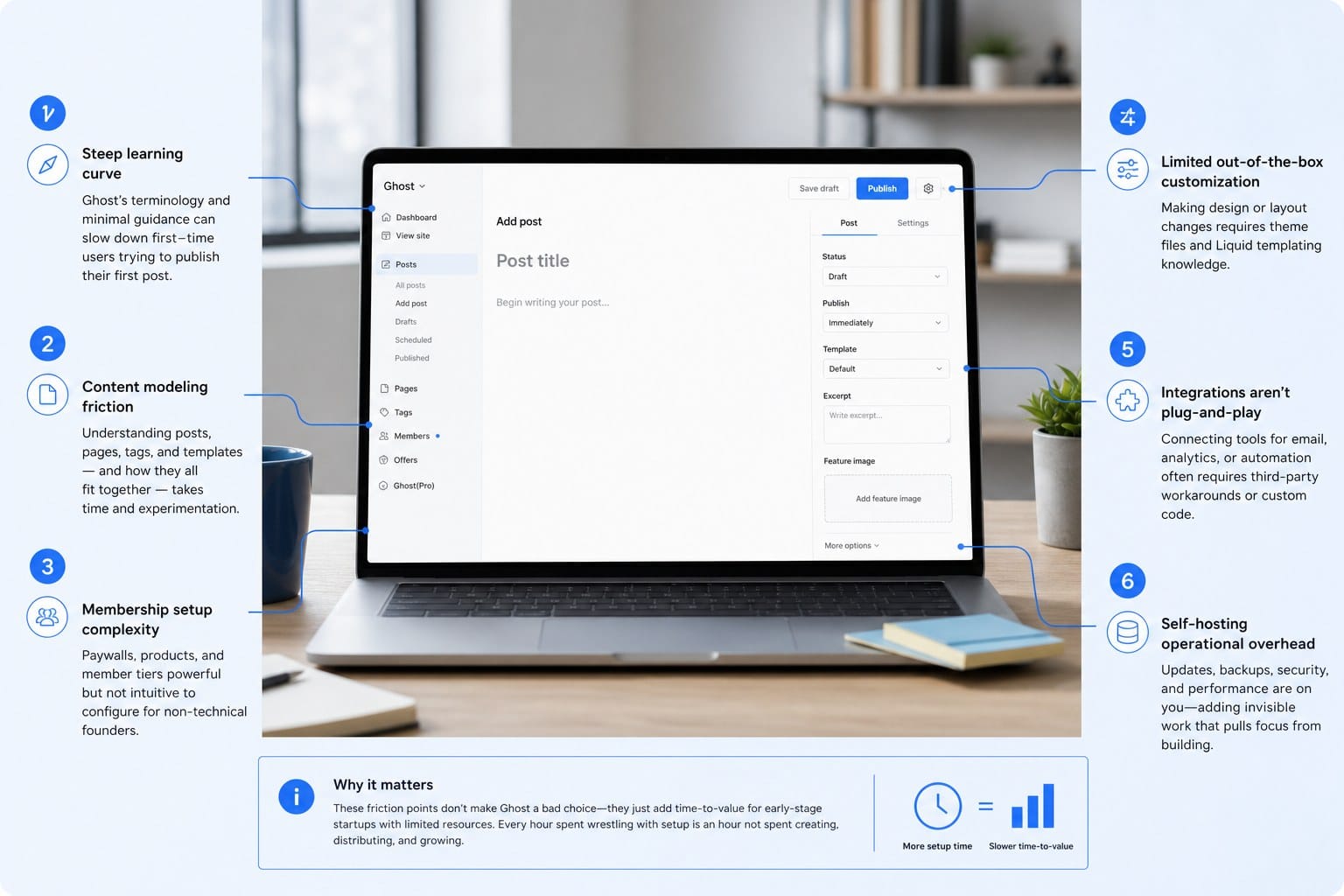
Ghost is excellent at what it does, but it is deliberately narrow. That narrowness is the source of most of the friction startups run into, and you need to know about it before you commit.
The plugin and integration ecosystem is smaller than you might expect. Ghost supports integrations through Zapier, its API, and a modest library of native integrations. If your startup relies on a specific marketing stack, you will want to check whether Ghost connects to those tools before you assume it does. CRM integrations, certain analytics platforms, and some marketing automation tools require custom work to connect properly.
Themes are another consideration. Ghost has a marketplace of free and paid themes, and they are generally clean and well-built. But customization requires knowledge of Handlebars, the templating language Ghost uses. If you want a highly custom design and your team does not have a developer who knows Handlebars, you are looking at either hiring someone or paying for a premium theme and living within its constraints. That is not a dealbreaker, but it is a real cost that surprises some founders.
Ghost is not a general-purpose website builder. It does not have native page builder capabilities for marketing landing pages, product pages, or complex site structures the way a full CMS might. Some startups use Ghost purely for their blog while running their main site on a different platform. That split-site approach works, but it adds complexity to your tech stack and can create inconsistencies in design and analytics.
The commenting system in Ghost is limited. Native comments were added relatively recently, and the functionality is basic compared to dedicated comment platforms. If community engagement is a core part of your content strategy, you may need a third-party commenting tool, which adds another integration to manage.
Membership and monetization features are built in, but they are designed around the newsletter business model. If your goal is simple content marketing to drive leads into a SaaS funnel, the membership layer is extra complexity you may not need. You can ignore it, but it is worth knowing that Ghost's roadmap is shaped heavily by the needs of creator-economy businesses rather than pure B2B content marketers.
Ghost's search functionality is not built in by default. You have to add search using a third-party script or integration. For a blog with a small number of posts, that is not urgent. But as your content library grows, on-site search becomes important for user experience and internal linking, and adding it to Ghost requires extra steps.
Multilingual support is another gap. Ghost does not have native support for content localization or multilingual publishing. If your startup serves international markets and needs content in multiple languages, you will need workarounds. Some teams manage separate Ghost publications for each language. That works, but it fragments your audience data and subscription management.
User roles and permissions in Ghost are functional but simple. You have contributors, authors, editors, and administrators. For a small team, that is fine. For a startup with multiple stakeholders who need nuanced access controls, the role system can feel limiting.
The analytics built into Ghost are basic traffic summaries. They tell you which posts are getting views and how your subscriber numbers are trending. For serious content marketing analysis, you will still need Google Analytics, a dedicated analytics platform, or a data warehouse integration. Ghost does not try to replace those tools, which is an honest choice, but it means you are managing another tool in your stack.
None of these limitations are necessarily reasons to avoid Ghost. They are reasons to go in with clear expectations. Ghost rewards startups that have a focused content strategy, a small publishing team, and a primarily English-speaking audience. It struggles when you need a Swiss-army-knife CMS that does everything.
If you are still figuring out what type of content your startup should focus on, working through how to choose a blog niche for long-term SEO growth before you make a platform decision will help you pick the right tool for the strategy, not the other way around.
Building a content engine on Ghost that actually scales
The biggest mistake startups make with Ghost is treating the platform decision as the hard part. Choosing Ghost is the easy part. The hard part is publishing consistently enough and at enough depth to actually move your SEO metrics.
Let me explain what I mean. Ghost gives you a fast, clean platform with solid SEO fundamentals. But a fast platform with no content is just an empty site. The ROI from Ghost, or any publishing platform, comes from the content you produce on it. That is where most startups fail. They set up Ghost, publish three or four posts in the first month, and then watch the cadence collapse as the team gets pulled back to product work.
Search engines reward consistency. Google and other search engines crawl your site regularly and notice whether you are adding new, substantive content. A site that publishes one strong article per week for a year will almost always outperform a site that publishes a burst of posts and goes quiet. That pattern holds across almost every industry.
This is a resource problem as much as a strategy problem. Writing a well-researched, long-form article that actually helps your target reader takes time. For a startup where every team member is already doing the work of two or three people, carving out time to write 1,500 to 3,000 words per week is genuinely hard. The result is that most startup blogs are inconsistent, and inconsistent blogs build domain authority slowly.
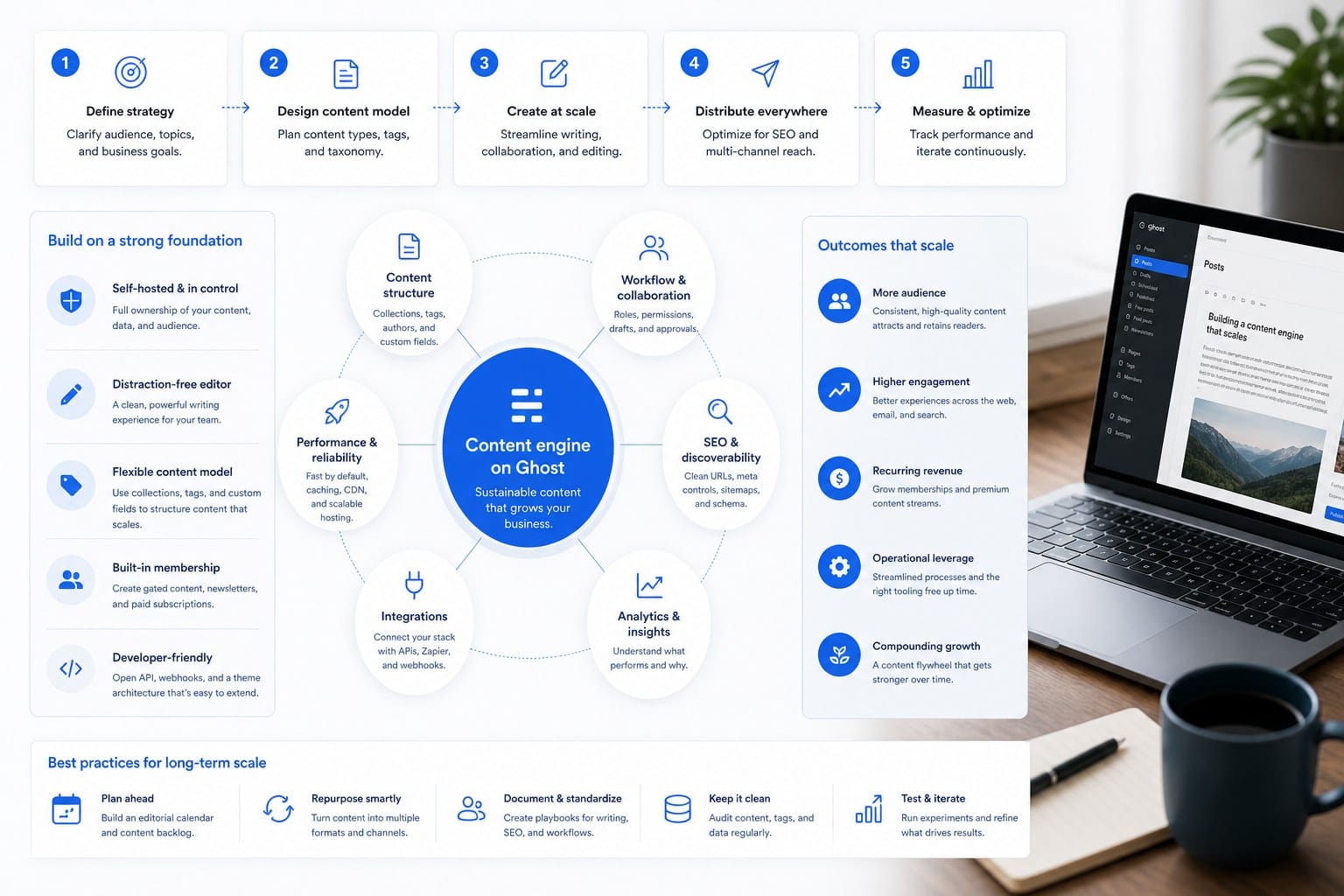
The structural answer to this problem is building a content system rather than relying on individual effort. A content system has a defined strategy, a content calendar, a production workflow, and a publishing schedule that runs even when the team is heads-down on a product release.
Ghost supports systematic publishing well. You can schedule posts in advance, which means a batch of articles written in one sitting can go out at regular intervals over the following weeks. The publishing API lets external tools push content directly into Ghost, which is the foundation of automated publishing workflows. If you are thinking seriously about Ghost for your startup, understanding how that API works and what you could connect to it is worth your time early.
Content strategy for a startup blog should be built around the keywords your target customers are actively searching for. That means looking at the questions your customers ask your sales team, the problems they describe in onboarding calls, and the comparisons they make when evaluating your product. Those conversations are a map to the content your audience actually wants to read.
Long-form, deeply researched articles consistently outperform thin content in search results. When I say deeply researched, I mean articles that actually answer the question thoroughly, include concrete examples, and go far enough into the topic that a reader does not need to go somewhere else to fill in the gaps. Ghost's editor is well-suited to this kind of writing. The block structure handles long articles cleanly and makes it easy to add formatting, images, and code without fighting the interface.
Internal linking is one of the highest-value things you can do within Ghost as your content library grows. When you link between related articles on your own site, you help search engines understand the structure of your content and you keep readers moving deeper into your site. Ghost makes internal linking easy because there are no technical barriers to adding links in the editor. The discipline comes from building a habit of linking new posts to older relevant content every time you publish.
On-brand visuals matter more than most startup blogs invest in. An article without relevant images or diagrams gets skimmed faster and shared less. Ghost supports native image uploads, and its themes generally handle image display well. The challenge for startups is producing visuals consistently without a dedicated design resource.
One area where Ghost CMS for startups genuinely shines is the newsletter integration. If you build a subscriber base through your blog, Ghost lets you send those subscribers a newsletter directly from the platform. That dual-channel approach, where your content reaches readers through both search and email, significantly increases the return on each article you publish. A post that ranks on page two of search results can still drive substantial traffic if you have a newsletter list that sends readers directly to it.
Automating the production side of your content operation is the most direct way to solve the consistency problem. When article research, drafts, visuals, and scheduling are handled by a system rather than manual effort, your publishing cadence becomes predictable regardless of what else is happening in the business.
Blogtude is built to solve this exact problem for Ghost users and other CMS platforms. It generates a 30-day content strategy, produces deeply researched long-form articles with on-brand visuals, and publishes directly to Ghost automatically. That means your blog stays active and your SEO compounds even during product launches, hiring sprints, and fundraising rounds when there is genuinely no bandwidth for manual content work. You can see how Blogtude works at https://blogtude.com.
The question of whether AI-produced content can perform well in search is one I get asked a lot. The honest answer is that it depends entirely on quality. Thin, generic AI content does not rank well and should not. Deeply researched, well-structured content that genuinely serves the reader can and does perform, and understanding whether AI blog content can meet Google's quality guidelines gives you a clear picture of what the bar actually is.
When you are evaluating Ghost for your startup, think about publishing as a long-term infrastructure decision rather than a short-term setup task. The platform you choose will shape how easy or hard it is to publish consistently, integrate with your marketing stack, and scale your content operation as your team grows. Ghost is an excellent choice for startups with a focused content strategy and the discipline or systems to publish regularly. It is a frustrating choice for startups that need a general-purpose CMS or expect the platform itself to solve the consistency problem.
My recommendation is to treat Ghost as a solid foundation and invest the real energy in building the content system that runs on top of it. Define your keyword targets, build a realistic editorial calendar, create a workflow for production, and set up automation wherever you can. The startups that get the most out of Ghost are the ones that take publishing as seriously as product development and build systems that keep it running without relying on manual willpower every week.
Ready to take the next step?
If your startup is on Ghost or planning to move there, the biggest lever you have is consistent, high-quality content published on a schedule that does not depend on your team having spare hours. Blogtude generates your content strategy, writes the articles, creates visuals, and publishes directly to Ghost so your blog runs even when you are focused on everything else. See how it works at blogtude.com and start building the content engine your organic growth actually needs.


