
Ghost CMS review: is it the right platform for serious bloggers

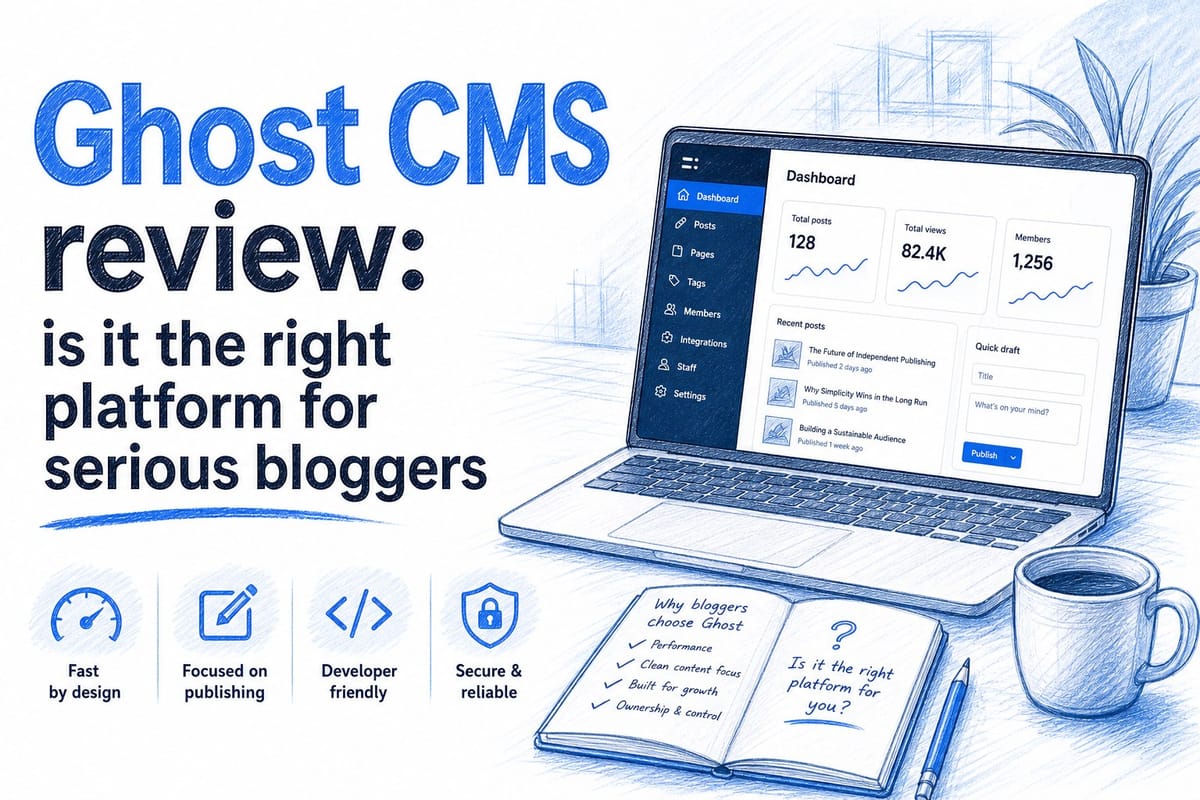
Table of contents
1. What Ghost CMS actually is and how it works
2. The real strengths and honest weaknesses of Ghost for bloggers
3. Who Ghost is right for and how to maximize it
If you have spent any time researching blogging platforms, you have almost certainly come across Ghost. It shows up in comparison articles, Reddit threads, and YouTube videos as the clean, fast, developer-friendly alternative to WordPress. But is it actually the right home for serious bloggers? I spent a lot of time digging into Ghost CMS, and this ghost cms review is my honest take on what it does well, where it falls short, and who it is really built for. Whether you are an independent blogger, a SaaS founder, or a small business owner trying to build organic traffic, this article will help you decide if Ghost deserves a spot in your publishing stack.
What Ghost CMS actually is and how it works
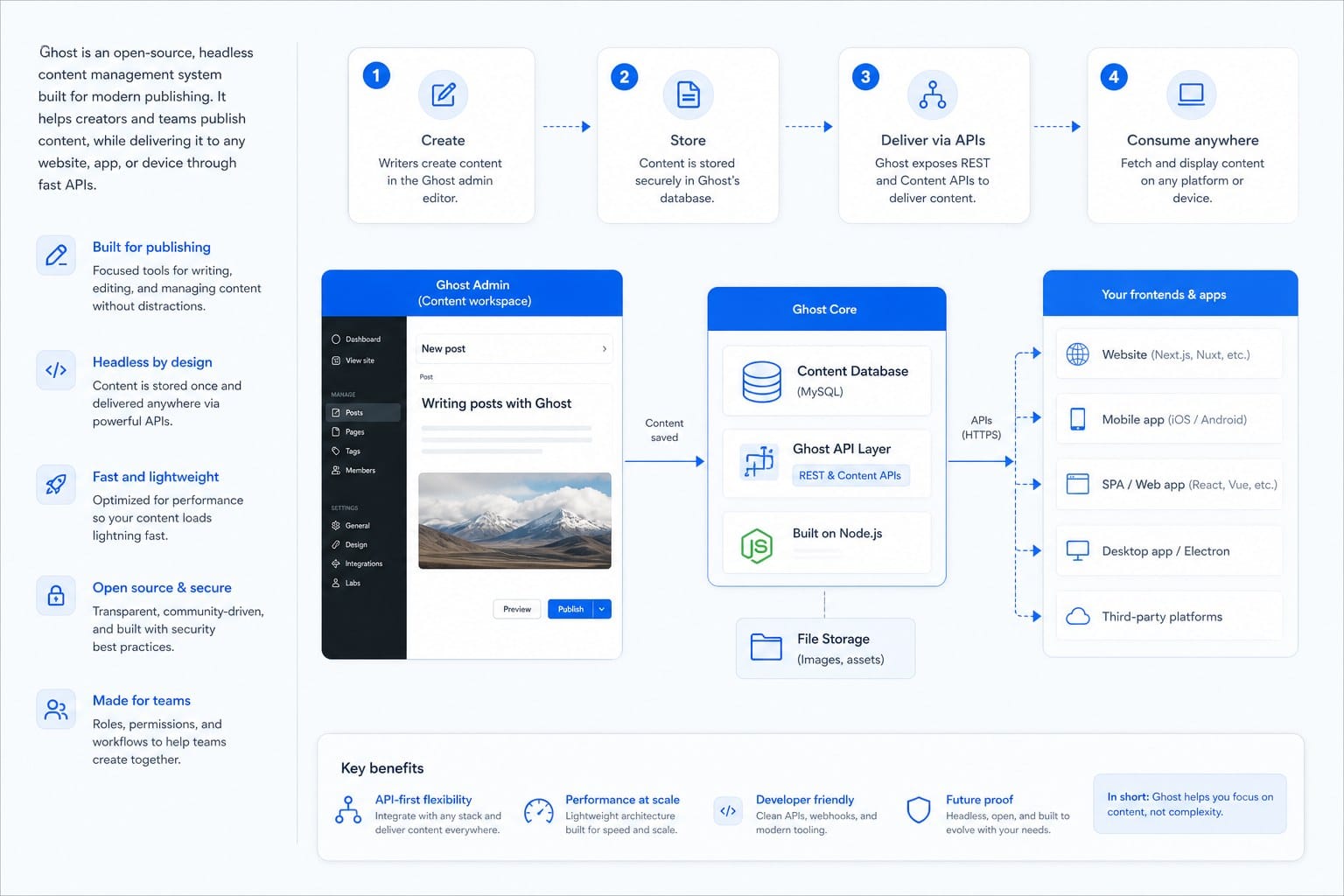
Ghost is an open-source content management system built specifically for publishing. It launched in 2013 as a Kickstarter project started by former WordPress employees who wanted a blogging tool that did one thing well: let writers write. Unlike WordPress, which grew into a general-purpose website builder with thousands of plugins, Ghost stayed focused. It is a publishing platform first, and everything about its design reflects that.
At its core, Ghost gives you a clean editor, fast page loads, native SEO tools, a membership and subscription system, and a newsletter feature baked directly into the platform. You do not need to install a plugin to collect email subscribers. You do not need a separate tool to send newsletters to your audience. All of that lives inside Ghost by default.
Ghost comes in two versions. The first is Ghost Pro, which is the hosted version managed by the Ghost Foundation. You pay a monthly fee, and they handle servers, updates, and backups. The second is Ghost Self-Hosted, which is free to download and run on your own server. That option gives you complete control but requires technical knowledge to set up and maintain.
The editor inside Ghost is called Koenig. It is a card-based editor, which means you add different content blocks, such as text, images, galleries, embeds, and code, by selecting cards from a menu. Writers who come from Notion or Medium tend to adapt to it quickly. Writers who are used to the classic WordPress block editor sometimes need a few days to get comfortable.
Ghost handles routing, sitemaps, canonical tags, and meta descriptions natively. You can set a custom meta title, meta description, and OG image for every post without installing a separate SEO plugin. Structured data for articles is generated automatically. For bloggers who care about search performance, this is a meaningful time saver.
One feature that often surprises people is Ghost's built-in membership system. You can create free and paid tiers, gate specific content behind a paywall, and charge subscribers monthly or annually. Ghost connects directly to Stripe for payment processing. This makes it a genuine option for creators who want to monetize their writing without stitching together a dozen third-party tools.
On the performance side, Ghost is genuinely fast. The platform generates static-like pages by default and uses server-side rendering efficiently. Most Ghost sites score well on Core Web Vitals without much optimization work. That matters because page speed is a ranking signal, and slow sites lose readers before they even start reading.
Ghost also has a robust API, which means developers can use it as a headless CMS and pull content into any front-end they build. For teams running custom workflows or integrating Ghost into a larger tech stack, that flexibility is valuable.
Now, there are things Ghost does not do. It is not a general-purpose website builder. You cannot easily build a complex landing page, a portfolio site with custom post types, or an ecommerce store inside Ghost without significant custom development. If you need a site that does many different things beyond publishing content, Ghost may frustrate you.
The theme ecosystem is smaller than WordPress. Ghost has a marketplace of themes, and there are third-party options available, but the selection is much narrower than what WordPress offers. If you want a highly specific visual design, you may need to hire a developer or learn Handlebars templating, which is what Ghost uses for its themes.
Dependencies are worth mentioning too. Ghost runs on Node.js, which is less common than PHP. If you self-host, you need a server that supports Node, and not every shared hosting provider does. DigitalOcean, Linode, and Vultr work well, but they require more technical setup than a simple cPanel hosting account.
So who is Ghost actually designed for? At its best, Ghost serves writers, journalists, newsletters, and content-driven businesses that want a clean, fast, professional publishing environment. It is not trying to compete with Squarespace on design flexibility or WooCommerce on ecommerce. It is trying to be the best publishing platform in the world for people who take content seriously.
For bloggers who write regularly and want their site to feel like a real publication rather than a patched-together WordPress install, Ghost delivers a noticeably different experience. The question is whether that experience is worth the trade-offs, and that depends entirely on what you need your blog to do.
The real strengths and honest weaknesses of Ghost for bloggers
Let me walk through what Ghost does genuinely well, and then be equally direct about where it creates friction. Both sides of this equation matter if you are making a real decision about your platform.
Ghost's biggest strength is writing experience. When you open a new post in Ghost, you are looking at a mostly blank canvas with minimal UI clutter. The editor gets out of your way. There are no sidebars crowded with widgets, no toolbar with forty options, no warning messages about plugin conflicts. You write, you format when needed, and you publish. For bloggers who spend hours inside their CMS every week, this matters more than most platform comparisons acknowledge.
SEO performance is another genuine strength. I already mentioned the native meta fields and sitemaps, but there is more to it. Ghost outputs clean HTML. There is no plugin bloat adding unnecessary JavaScript to every page. The markup is semantic and well-structured. Google can crawl and index Ghost sites efficiently. Combine that with fast load times, and you are starting from a strong technical foundation for search.
The newsletter integration is something I find genuinely impressive. When a reader visits your Ghost site and enters their email address, they become a member. You can then send them a newsletter directly from the Ghost admin panel, and it uses the same content you wrote for your post. You do not need Mailchimp, ConvertKit, or any other email tool for basic newsletter functionality. For bloggers building an owned audience alongside their SEO traffic, this is a significant advantage.
Ghost's membership and monetization features are also mature and well-implemented. Setting up paid tiers, creating member-only posts, and managing subscriber segments is all done inside Ghost without plugins. If you are building a paid newsletter or a members-only content library, Ghost handles that workflow cleanly.
Analytics inside Ghost are minimal by design. The platform shows you basic traffic numbers and member growth, but it does not try to be Google Analytics. Most serious bloggers will connect a third-party analytics tool anyway, so this is not a major gap, but it is worth knowing.
Now for the weaknesses.
Cost is a real consideration. Ghost Pro starts at around 9 dollars per month for very low traffic sites, but the plan you actually need as your site grows can run significantly higher. The pricing tiers are based on the number of members, not just traffic, which means that as your newsletter audience grows, your monthly bill increases. For a blogger just starting out, the self-hosted option is free, but the technical overhead is a cost of its own.
The plugin and integration ecosystem is much smaller than WordPress. If you rely on specific tools for things like affiliate link management, advanced forms, complex redirects, or course delivery, you may find that Ghost does not have a direct plugin for what you need. You often have to work around limitations using Zapier, Make, or custom code. That is doable, but it adds complexity.
Content migration is painful. Moving a large blog from WordPress to Ghost is not a one-click process. Ghost has an import tool that handles basic WordPress exports, but images, internal links, shortcodes, and custom post types often break or need manual cleanup. If you have hundreds of published posts, expect to spend significant time on migration.
The theme ecosystem is limited compared to WordPress. There are good Ghost themes available, but if you have a very specific visual direction in mind, you may not find what you are looking for without custom development. Handlebars templating has a learning curve, and Ghost themes are not as well-documented as WordPress themes for non-developers.
Collaboration features are basic. Ghost does not have a built-in editorial workflow with review stages, commenting on drafts, or role-based permissions beyond simple staff and author roles. For a solo blogger this is fine. For a team managing a brand blog with editors, writers, and approvals, it creates friction.
Consistency is where many Ghost users quietly struggle. Ghost gives you a great environment to publish, but it does not help you decide what to write about, how often to publish, or how to build a content strategy that actually drives organic traffic. The platform is the car, but you still have to be the driver, navigator, and mechanic all at once. This is a challenge I see come up constantly, and it connects to something I have written about before: the real reason your blog is getting no organic traffic is almost never the platform you chose. It is the absence of a consistent, intentional content strategy.
Ghost gives serious bloggers a genuinely excellent publishing environment. But the platform does not solve the hard problem of building and maintaining a content engine that actually grows over time. That requires a different kind of system altogether.

Who Ghost is right for and how to maximize it
After spending a lot of time with Ghost, my honest conclusion is that it is an excellent platform for the right person in the right situation. It is not the best choice for everyone, and being clear about that will save you from making a frustrating platform switch in six months.
Ghost works best for writers and bloggers who value a clean, distraction-free publishing experience and want a platform that treats content as the primary product. If you are serious about building a readership, growing a newsletter, and potentially monetizing your writing through memberships, Ghost is one of the strongest options available. It is faster than most WordPress installs, cleaner to manage, and genuinely more enjoyable to write in day to day.
SaaS founders and startup content teams often gravitate toward Ghost because it handles the developer-facing integrations they care about, produces fast-loading pages that help with SEO, and does not require a plugin army to function well. If you are running a content-driven growth strategy and you have someone on your team who is comfortable with Node.js or willing to use Ghost Pro, the platform holds up well under professional use.
For independent bloggers who want to grow organic traffic through consistent long-form content, Ghost is a solid foundation. But a platform alone will not grow your traffic. You also need a content strategy, a publishing cadence you can actually maintain, and articles that are researched well enough to compete in search. If any of those three things are inconsistent, your Ghost site will sit mostly empty, which is a waste of a genuinely good tool.
Small business owners are the group I think should think most carefully before choosing Ghost. If you need a simple blog attached to a business site that also does things like showcase services, display testimonials, and convert visitors into leads, Ghost may not be flexible enough for your full needs without significant custom development. You might be better served starting on a platform with more design and layout flexibility and then reconsidering Ghost if and when publishing becomes your primary focus.
If you are already a Ghost user and you are happy with the platform but struggling with content output, the gap you are trying to close is almost certainly not a platform problem. It is a workflow problem. Ghost does not help you plan a content calendar, research topics your audience is actually searching for, write articles at scale, or publish consistently when life gets in the way. Those are execution challenges, and they require a different kind of solution.
This is exactly the kind of challenge that a content engine for your blog is designed to solve. A content engine is the system that sits behind your publishing platform and keeps the whole machine running, from topic research and article production to scheduling and publishing. Ghost is a great front end. A content engine is what powers the back end.
For many bloggers, the goal is to get to a place where their blog produces consistent output without requiring a full-time commitment every week. Ghost does not automate that process. It gives you a great place to publish once you have something to publish. The gap between having a great platform and having a blog that actually grows is almost always about what happens before the writing gets done.
If you are thinking about how to build a system that handles content strategy and publishing without requiring your constant hands-on attention, the article I wrote on how to build a blogging system that runs without you goes deep on exactly that. The core idea is that Ghost gives you the destination, but you need a system that gets content there on a schedule that actually moves the needle for SEO and audience growth.
For Ghost users specifically, the integration opportunity is real. Because Ghost has a well-documented API and supports automated publishing through its Admin API, it is one of the few CMS platforms that can truly receive and publish content programmatically without workarounds. That makes it an ideal platform to pair with an automated content workflow, because you can go from topic idea to published article without opening your CMS at all.
Here is a practical way to think about your stack if you are serious about growing a blog on Ghost. Use Ghost for what it is genuinely excellent at: creating a fast, clean, professional publishing environment that readers trust and search engines can crawl efficiently. Then build or adopt a content system that handles everything upstream of publishing: keyword research, editorial planning, article writing, and scheduling. When those two pieces work together, Ghost becomes far more powerful than it is when used in isolation.
The bloggers I see getting the most out of Ghost are the ones who treat it as one component of a larger content operation rather than the whole operation. They know what their editorial calendar looks like three months out. They have a reliable process for producing articles. They publish on a schedule that is consistent enough to signal authority to search engines. Ghost is where all of that work lands, and it lands well.
For everyone else, the honest answer is that Ghost is a genuinely good platform that may not be the right platform for where you are right now. If you are just getting started, need lots of design flexibility, run a complex multi-purpose website, or do not yet have a reliable content production process, you may find Ghost creates more friction than it removes. That is not a criticism of Ghost. It is a recognition that different tools serve different situations.
My overall take from this ghost cms review is positive, with clear eyes about the limits. Ghost is a serious platform for serious publishers. It is fast, focused, clean, and increasingly capable as a business tool with its membership and newsletter features. If you are ready to commit to it and pair it with a genuine content strategy, it will serve you well for years. If you are looking for a platform to solve your content consistency problem by itself, no CMS can do that, and Ghost is no exception.

Ready to take the next step?
At Blogtude, we built our platform specifically for bloggers and brands who are serious about growing through content but do not have the time or team to do it manually. Blogtude generates a 30-day content strategy, writes deeply researched long-form articles with on-brand visuals, and publishes directly to Ghost and other CMS platforms automatically. If you are a Ghost user who wants consistent, high-quality content without spending your weekends writing it, Blogtude is built for exactly that. Visit https://blogtude.com to see how it works and start your first content strategy today.


