
How SaaS startups can use blogging to drive organic traffic from day one

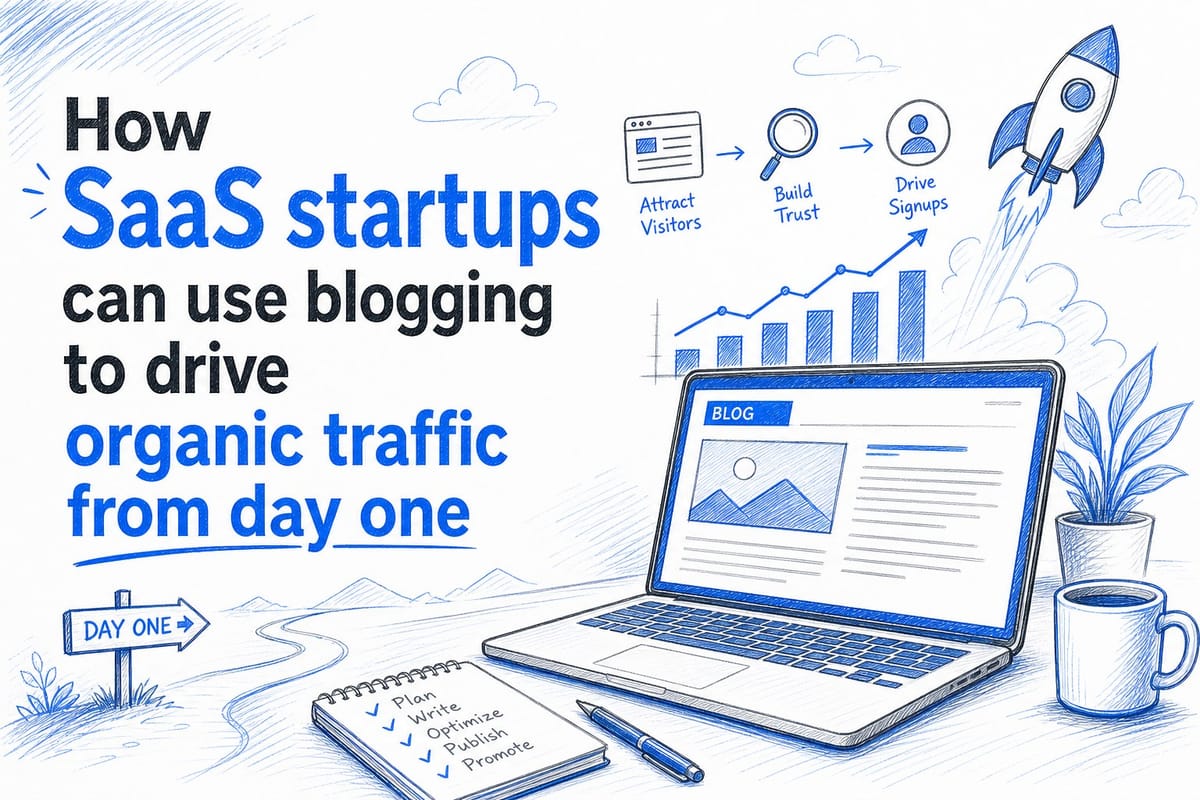
Table of contents
1. Why blogging works differently for SaaS than for other businesses
2. Building the strategy before you write a single word
3. Executing consistently without burning out your team
Most SaaS startups burn their early budget on paid ads and cold outreach. Those channels can work, but they stop the moment you stop paying. Blogging is different. A well-written article can pull in qualified visitors for years after you publish it, and it costs nothing to keep running once it ranks. The challenge is that most early-stage teams have no dedicated writer, no content calendar, and no clear idea what to write about. That leads to a handful of posts, a long silence, and a blog that never builds any real momentum. This guide walks through exactly how a SaaS startup can build a real organic traffic strategy from the very first week, not six months down the road, without hiring an entire content team or abandoning the product work that actually keeps the business alive.
Why blogging works differently for SaaS than for other businesses
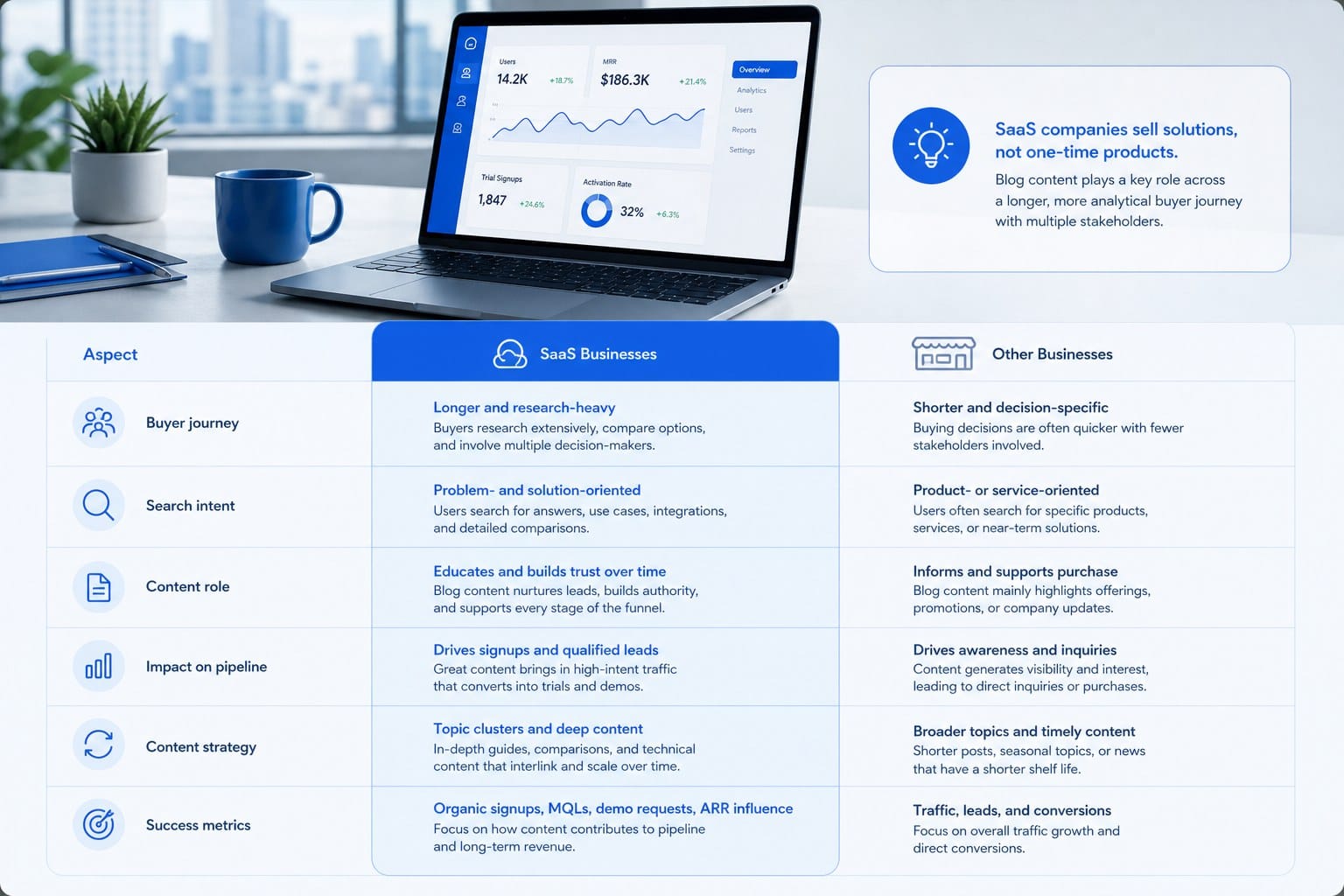
SaaS products solve specific, repeatable problems. That is a genuine advantage when it comes to organic search, because specific problems produce specific search queries, and specific search queries are far easier to rank for than broad ones.
Think about a project management tool built for freelancers. The people who need it are searching things like "how to track client projects without a spreadsheet" or "invoicing and project management for solo designers." Those are long-tail queries with clear intent. A blog post that answers one of those questions directly can reach the first page of Google within weeks, especially in a niche where there is limited competition and the existing content is thin or outdated.
Broad consumer brands have to compete for massive keywords where domain authority takes years to build. SaaS products, especially early-stage ones, usually operate in tighter verticals. The keyword landscape is more approachable, and the people who find your blog are already halfway sold on the category of solution you offer. They are not casually browsing. They have a problem and they are looking for something that solves it.
There is also a trust dynamic that works in your favor. B2B buyers, which describes most SaaS customers, do not buy on impulse. They research, compare, and read before they ever talk to a salesperson or start a free trial. A blog that consistently publishes helpful, detailed content signals that the company behind the product understands the problem deeply. That credibility builds over time and is very hard for a competitor to replicate quickly because authority is earned through volume and consistency, not purchased.
Another reason blogging works well for SaaS is the natural overlap between content topics and product use cases. If your tool helps e-commerce stores manage inventory, then articles about inventory management challenges, reorder point formulas, and demand forecasting basics are all directly relevant to your audience. Every post serves double duty: it attracts search traffic and it educates potential customers about the exact category of problem your product solves. Readers who find your content through a how-to article and then discover your product already understand why they might need it. That is a very different buyer than someone who clicked a paid ad with no prior context.
None of this happens by accident, though. The SaaS founders who fail at blogging usually make one of three mistakes. They write about company news that nobody outside the team cares about. They publish sporadically and never build enough topical depth for Google to treat them as a reliable source on any subject. Or they pick topics based on gut feeling rather than actual keyword research, which means they write content that never gets found because nobody is searching for those phrases.
A solid strategy fixes all three of those problems before the first post goes live. And it starts not with writing but with understanding exactly who you are trying to reach and what they are already searching for.
One more thing worth saying here: the SaaS blogs that build meaningful organic traffic are not the ones trying to appeal to everyone. They are the ones that go deep on a narrow audience. A blog about "productivity" is competing with thousands of publishers. A blog about "productivity for independent financial advisors" is competing with almost nobody, and the readers it attracts are exactly the kind of people who become paying customers. Narrowing your focus early is not a limitation. It is a competitive advantage that compounds over time.
Building the strategy before you write a single word
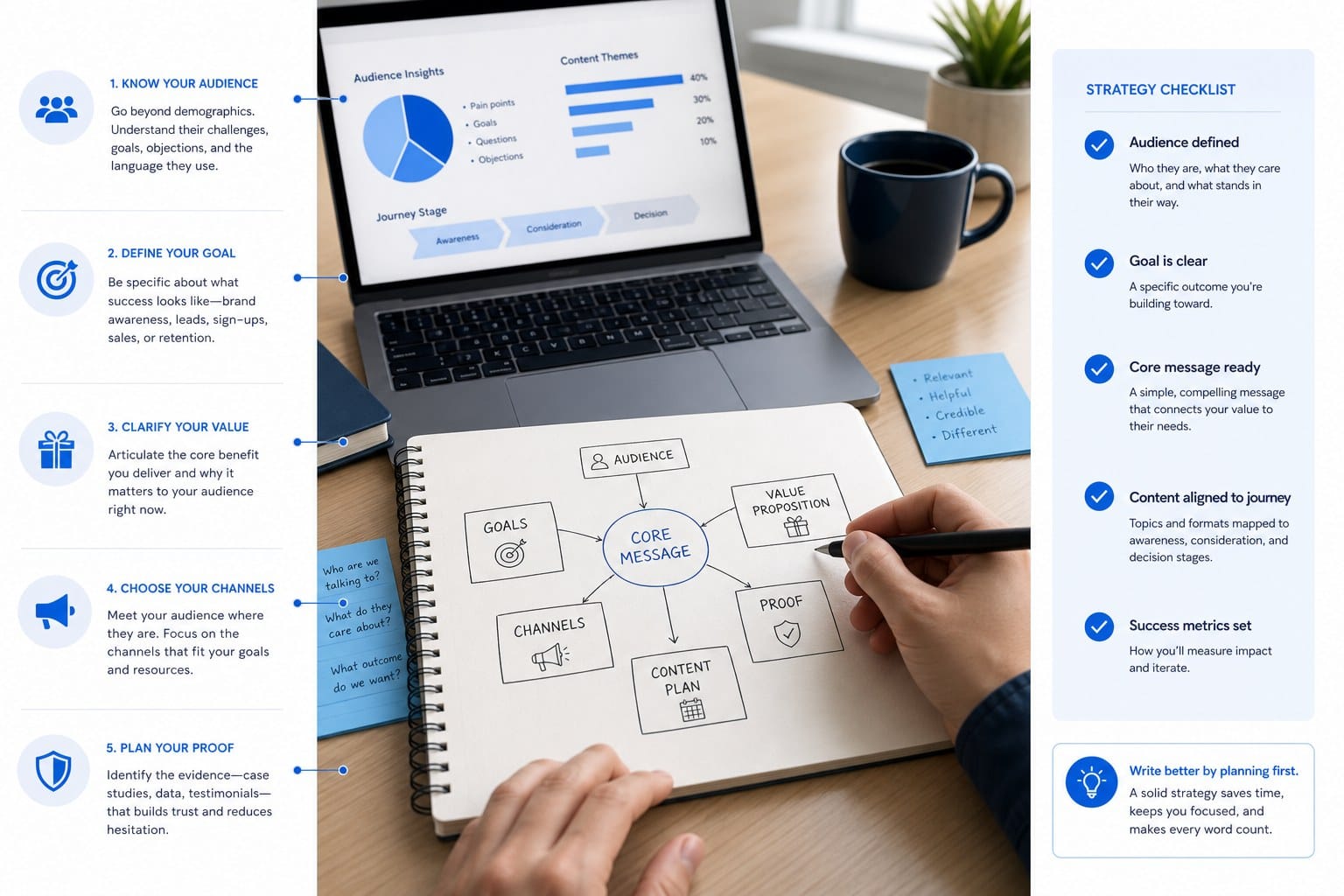
The biggest mistake SaaS teams make is treating blogging as a writing problem when it is really a planning problem. If you get the strategy right, the writing becomes much more straightforward. If you skip the strategy, you can produce a lot of content and still build almost no organic traffic.
Start with your customer, not with keywords. Write down the five to ten most common questions your prospects ask before they buy. Write down the objections that come up on sales calls. Write down the workflows your product fits into and the tools it replaces or complements. That list is the raw material of a content strategy that attracts exactly the people who are likely to become customers, because those are the exact questions they are typing into Google.
From that list, map topics to actual search queries. There are free and paid tools that show you how often a phrase is searched and how competitive it is to rank for. The terms worth targeting early are usually mid-length queries with clear commercial or informational intent and relatively low difficulty scores. You are not going after "project management software" in month one. You are going after "how to manage client revisions without email chains" or "project management setup for creative agencies under ten people." Those phrases have real search volume, clear intent, and far less competition than the obvious head terms.
Once you have a list of 20 to 30 solid topic ideas, group them by theme. Search engines reward what SEOs call topical authority, meaning a site that covers a subject comprehensively tends to outrank a site that only has one or two posts on it. If you are building a scheduling tool for therapists, you want a cluster of posts around therapy practice management, not a scattered mix of topics that have nothing to do with each other. Plan your first 30 days so that every post reinforces the same core theme. This is how you signal to Google, quickly, that you are a reliable source on a specific subject.
Think carefully about what format each topic deserves. Some questions are best answered with a step-by-step guide. Others need a comparison table, a checklist, or a definitional explainer that goes deeper than the surface-level definitions most blogs stop at. Matching format to intent matters because Google evaluates whether a page actually satisfies the searcher's need. A listicle works for "best tools for X" queries. A long how-to guide is better for "how do I do Y." Getting this right from the start saves you from publishing content that ranks but has a terrible bounce rate because readers expected something different and left immediately.
Internal linking is another pillar of a strong SaaS blog organic traffic strategy that most teams ignore until they have 50 posts and a structural mess to clean up. Plan it from day one. When you publish your first cluster of posts, link them to each other using descriptive anchor text. This tells search engines how your topics relate to each other and it keeps readers on your site longer. A post about inventory reorder points should link to your post about safety stock calculations, which should link back to an overview of inventory management best practices. Those connections build a web of relevance that helps every post in the cluster rank better than it would in isolation.
Set a realistic publishing cadence and commit to it before you start. Consistency beats volume. Two well-researched posts per week will outperform five rushed posts in week one followed by three weeks of silence. Google notices regularity. More importantly, your readers notice. A blog that publishes on a predictable schedule builds an audience. One that goes quiet for months loses whatever momentum it built and has to rebuild trust with search engines all over again.
Competitor analysis is another planning step that pays off significantly. Look at the blogs of SaaS companies in adjacent spaces that are six to twelve months ahead of you in terms of content volume. What topics are they covering? What is ranking well for them? Where do they have obvious gaps, outdated information, or posts that are too shallow to genuinely help someone? Those gaps are your opportunities. You do not need to copy anyone. You need to find where the existing content is insufficient and write something better.
If you want to understand the broader infrastructure that supports a strategy like this, the article What is an AI content engine and does your brand need one breaks down how modern content systems handle both planning and execution without requiring a full-time team. It is worth reading before you decide how to structure your workflow.
Finally, decide upfront how you will measure success. Organic traffic is the obvious metric, but it takes time to build and can be misleading in the early weeks. Better early indicators include: search impressions in Google Search Console growing week over week, average ranking positions improving for your target queries, and time-on-page for your articles staying above two minutes. Those signals tell you whether your content is headed in the right direction before you have the traffic numbers to prove it.
Executing consistently without burning out your team
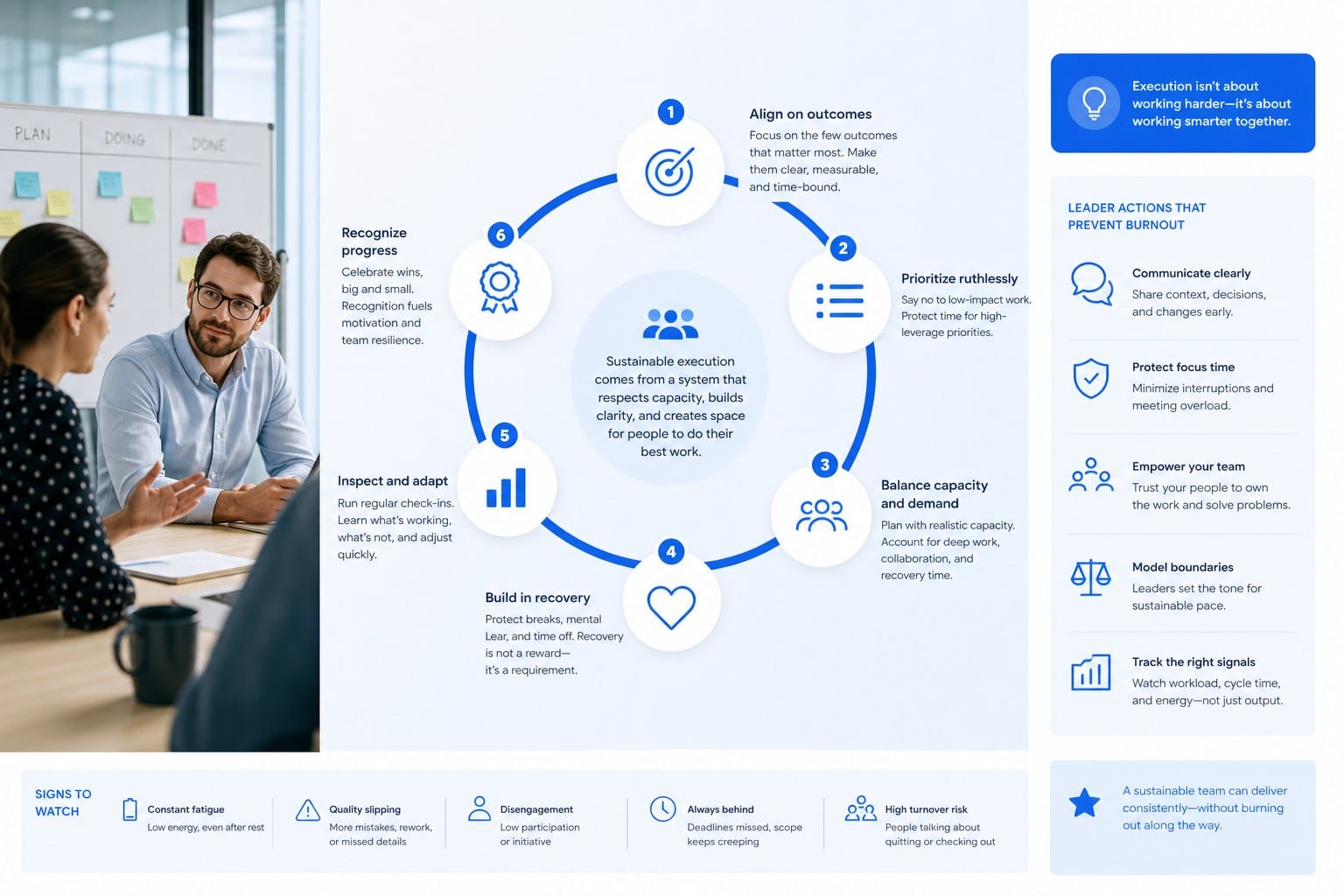
Strategy on paper is straightforward. Execution over months is where most SaaS startups fall apart. Founders are focused on the product. The one person handling marketing is juggling three other channels. Writing a 2,000-word, well-researched post feels impossible when you are also doing demos, fixing bugs, and trying to close your first paying customers. This is the execution gap, and it is why so many SaaS blogs start strong in month one and go dark by month three.
Understanding what consistent execution actually requires makes it easier to plan for.
Research comes first. Every good post starts with understanding what the reader needs to know, what questions they have, what misconceptions they are working from, and what other content they will see when they search the topic. Done properly, this takes one to two hours per article. You need to look at the existing top-ranking pages, identify what they cover and what they miss, and find a way to publish something more complete or more specific to your audience's situation.
Then comes writing. A 2,000-word article written to a quality standard that will actually rank and hold attention takes several hours even for an experienced writer. For a founder with no writing background, it can take a full day. Multiply that by two posts per week and you are looking at a major time commitment before the article is formatted, illustrated, or published.
Publishing adds more time than most people expect. If you are on Ghost, WordPress, or another CMS, someone has to handle formatting, add images, write a meta description, configure the URL slug, tag the post correctly, and schedule the publish date. None of these steps are complicated individually, but done inconsistently they create SEO problems that are annoying to diagnose and fix later.
Distribution is the final layer. Organic traffic from search does not appear on day one. In the early weeks and months, you need to seed traffic through other channels: your email list, LinkedIn, X, relevant online communities, and any partnerships you have built. That is ongoing work on top of the content production itself.
There are a few ways SaaS teams handle this sustainably. Some hire a content writer or a freelance SEO strategist. That works well if you have the budget and the capacity to manage someone effectively. Others batch their writing, spending one concentrated day per month creating content for the next four weeks. That works if you have the discipline and the writing skill to produce quality output in bulk.
A third option is becoming more common among early-stage SaaS teams: AI-assisted content workflows that handle research, writing, visuals, and publishing as a connected process rather than a series of disconnected manual steps.
This is worth being specific about, because the term AI content gets used to describe everything from sophisticated research-and-writing systems to tools that produce generic, barely-readable text. The tools that actually work for organic SEO go much deeper than text generation. They analyze what is already ranking, structure articles around real search intent, and produce drafts that a human editor can review and approve in a fraction of the time it would take to write from scratch. The output still requires a human eye, but the time investment drops dramatically.
If you want to see how different tools compare on this point, the breakdown in AI blog writing tools compared: which actually produces publish-ready content looks specifically at whether the output is actually ready to publish or whether it requires so much editing that you have not saved meaningful time. That distinction matters a lot when you are evaluating whether a tool fits into a real production workflow.
For teams running on Ghost, there is also the question of how you connect content production to your CMS without adding manual steps at the end of every cycle. Automating the publish step is something many teams overlook until they are managing a large backlog of drafted posts and realizing that someone still has to touch each one individually. The guide on Ghost CMS automation: how to automatically publish blog posts covers exactly how to set that up so your content pipeline runs end to end without someone manually hitting publish every time.
Beyond tooling, there are execution habits that separate SaaS blogs that build real organic traffic from the ones that plateau.
Update existing posts on a regular schedule. Google favors content that stays current, and a post that was accurate when you wrote it eighteen months ago may now reference outdated tools, cite statistics that have changed, or miss developments that your readers need to know about. A quarterly audit of your top-performing posts, adding new sections, updating figures, and improving internal links, can lift traffic meaningfully without requiring you to write anything from scratch. Updating older content is often the highest-leverage activity for a blog that has been publishing for six months or more.
Track what is working from day one. Google Search Console shows you which queries are bringing people to your site, which posts are getting impressions but low click-through rates, and where you are ranking for terms you did not even target intentionally. That data tells you where to publish more content, where to improve titles and meta descriptions, and where to rethink your approach entirely. Teams that ignore this data are flying blind and often discover six months in that their highest-traffic posts have nothing to do with their most important use cases.
Pay attention to on-page signals beyond the text itself. Page load speed, mobile responsiveness, clear heading structure, descriptive image alt text, and clean URL slugs all contribute to how well a post performs in search. These are not glamorous, but they are the difference between a blog that slowly builds authority and one that gets stuck on page two regardless of how good the writing is.
There is also something worth saying about content quality that gets lost in conversations about SEO tactics. The best organic traffic strategy is writing content that is genuinely useful to the person reading it. That sounds obvious but it gets ignored constantly because teams get too focused on keyword density, word count targets, and technical checklists. Google has gotten good at distinguishing content that genuinely answers a question from content that is structured to look like it does. Readers are even better at it. If your posts are detailed, specific, and honest about tradeoffs and limitations, they will be shared, linked to, and saved. If they are generic and padded to hit a word count, they will have high bounce rates and no backlinks, and they will not hold any ranking they initially earn.
For SaaS specifically, the content that performs best tends to be the most practical. Tutorials that show exactly how to do something, step by step, with real examples. Comparisons that acknowledge weaknesses honestly rather than pretending every product is perfect. Explainers that go deeper than the surface-level definitions most blogs stop at. Case studies built around real numbers rather than vague outcomes. This kind of content takes more effort to produce, but it also earns the kind of trust that turns a first-time reader into someone who tries your product.
The compounding nature of organic traffic is what makes it so powerful for SaaS businesses specifically. Paid acquisition has a roughly linear relationship with spend: invest twice as much, get roughly twice as many visitors. Organic works differently. A post that starts ranking in month two might double its traffic by month six as it earns more backlinks and Google sees that users engage with it and stay on the page. That traffic compounds with the next post and the next one. A SaaS blog with 50 solid, interlinked posts is not getting 50 times the traffic of a blog with one post. It is often getting 200 times or more, because topical authority, internal linking, and accumulated backlinks multiply the effect of each individual piece of content.
That compounding effect is exactly why starting early matters so much. Every month you wait is a month of compounding you forfeit. The founders who look back and identify their biggest content mistakes almost always say the same thing: they wish they had started six months earlier. The blog you publish today will be earning traffic two years from now regardless of what else changes in your marketing mix. The blog you keep putting off will not have had the time to build anything.
Ready to take the next step?
Building a consistent blog from day one is far more manageable when you have a system that handles the planning, writing, and publishing for you. Blogtude generates a 30-day content strategy, produces deeply researched long-form articles with on-brand visuals, and publishes automatically to Ghost and other CMS platforms. If you are ready to stop letting your blog sit empty while competitors build their organic presence, visit blogtude.com to see how it works.